


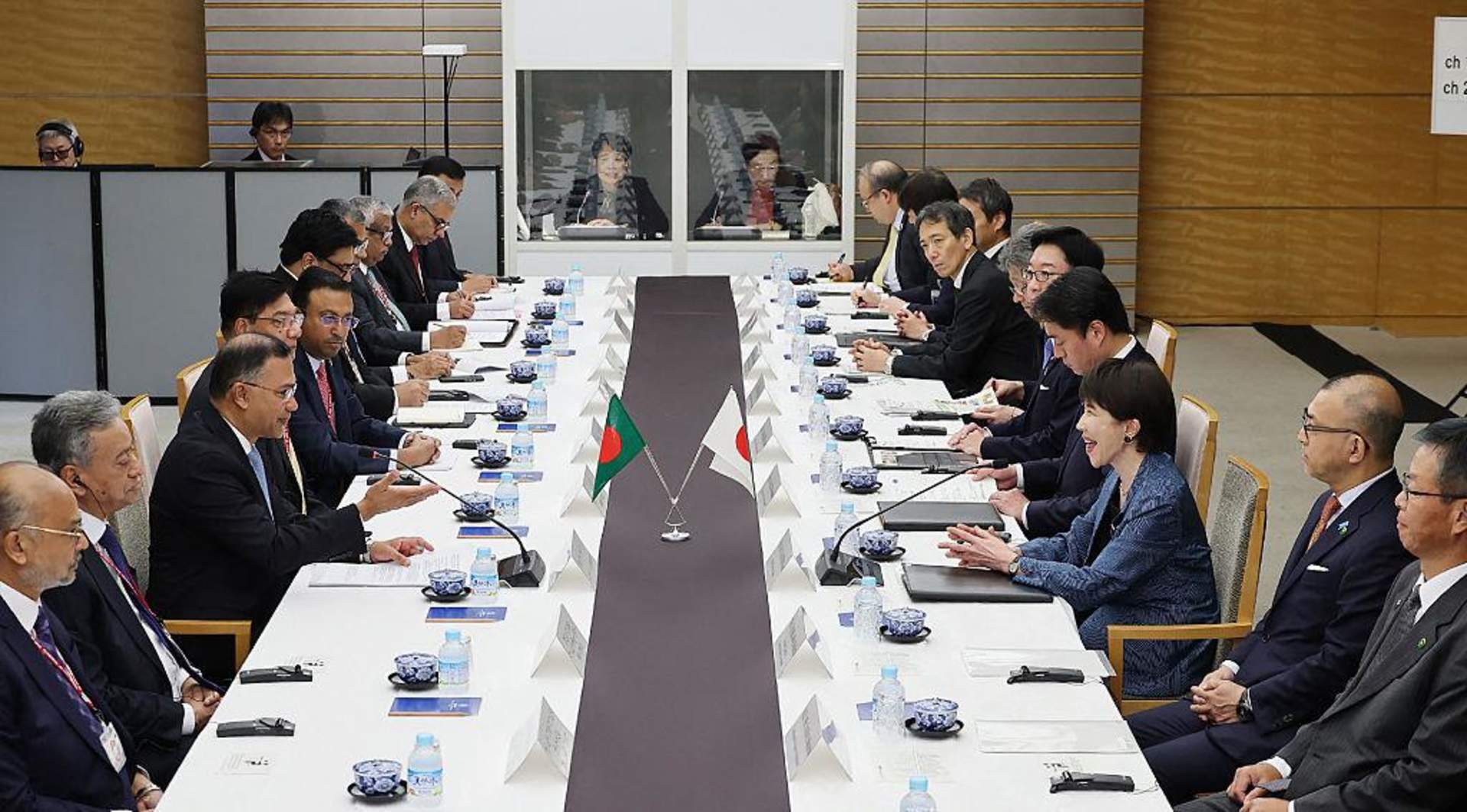
Bangladesh and Japan have signed six bilateral cooperation instruments and secured commitments for two Japanese yen-loan projects worth approximately $295.5 million, expanding cooperation in investment, maritime security, agriculture, skills development and local governance.
The agreements were announced during Prime Minister Tarique Rahman’s four-day official visit to Japan, which ran from October 26 to 29, 2026. The two countries also signed 17 memorandums of understanding between private-sector organisations, according to Bangladeshi officials.
The commitments cover several areas of Bangladesh’s development, from improving the business environment to supporting local government and strengthening coastal security.
Where the $295.5 million will go
The two proposed loan projects account for the largest financial commitments announced during the visit.
The first is a 15.88 billion yen project, valued at approximately $100.8 million, to improve Bangladesh’s investment environment.
The second is a 30.68 billion yen loan, worth approximately $194.7 million, for the second phase of the Upazila Governance and Development Project.
Together, the projects amount to approximately $295.5 million.
The investment-environment project is intended to support efforts to make Bangladesh more attractive to businesses. The local governance project focuses on development at the upazila level, where local authorities play a role in delivering public services and implementing development programmes.
However, the announcement of loan commitments does not mean the entire amount has already been disbursed. The projects’ implementation arrangements, financing conditions and progress will determine when the money becomes available and how effectively it is used.
A separate grant for maritime security
Alongside the two loan projects, Japan agreed to provide grant assistance worth up to 2.12 billion yen, or approximately $13.44 million, for a patrol vessel to strengthen Bangladesh’s maritime security capabilities.
The grant is separate from the $295.5 million in loan commitments.
Maritime security is relevant to Bangladesh because the country depends on its coastal waters and maritime routes for trade, fishing and other economic activities. A patrol vessel could strengthen monitoring and enforcement capabilities, although its practical impact will depend on operational readiness, personnel, maintenance and deployment.
What the six cooperation instruments cover
The six instruments span government-to-government cooperation in several sectors.
They include arrangements concerning economic relations and improvements to the business environment, agriculture, fisheries and livestock, and employment and skills development. A separate letter of intent covers climate-change cooperation, while the grant-aid agreement supports the maritime-security project.
The cooperation on skills development could help strengthen workforce capabilities, while agricultural and fisheries cooperation may support exchanges of expertise and institutional collaboration.
The climate-change arrangement provides a framework for further cooperation between the two countries. Its eventual value will depend on the programmes, resources and specific initiatives developed under it.
The agreements establish areas for cooperation, but their announcement alone does not demonstrate that particular projects have been completed or that measurable economic benefits have already been achieved.
Private-sector agreements add another layer
Beyond the six government-level instruments, Bangladeshi officials said 17 private-sector memorandums of understanding were signed through engagement involving the Japan External Trade Organization, known as JETRO.
These business agreements are separate from the government loan commitments.
Their significance will depend on the details of the participating companies, the proposed investments and whether the memorandums progress into binding contracts, funded projects or sustained commercial activity.
For Bangladesh, converting business interest into actual investment remains an important part of efforts to improve employment opportunities, expand exports and diversify economic activity.
What Bangladesh should watch next
The key question is how quickly the announced commitments translate into projects and tangible results.
For the loan-funded programmes, important milestones will include financing arrangements, project approvals, implementation schedules and the allocation of responsibilities between the relevant agencies.
For the investment-environment initiative, progress should be assessed through concrete improvements in business procedures and the conditions facing investors. For the Upazila Governance and Development Project, implementation and the delivery of services at the local level will be central measures of success.
The maritime-security grant will also require follow-through on procurement, delivery and operational deployment of the patrol vessel.
Bangladesh and Japan have outlined a broad agenda covering finance, security, business, agriculture, skills and climate cooperation. The next stage will be turning those commitments into funded activities and results that can be measured.

Comments
0