


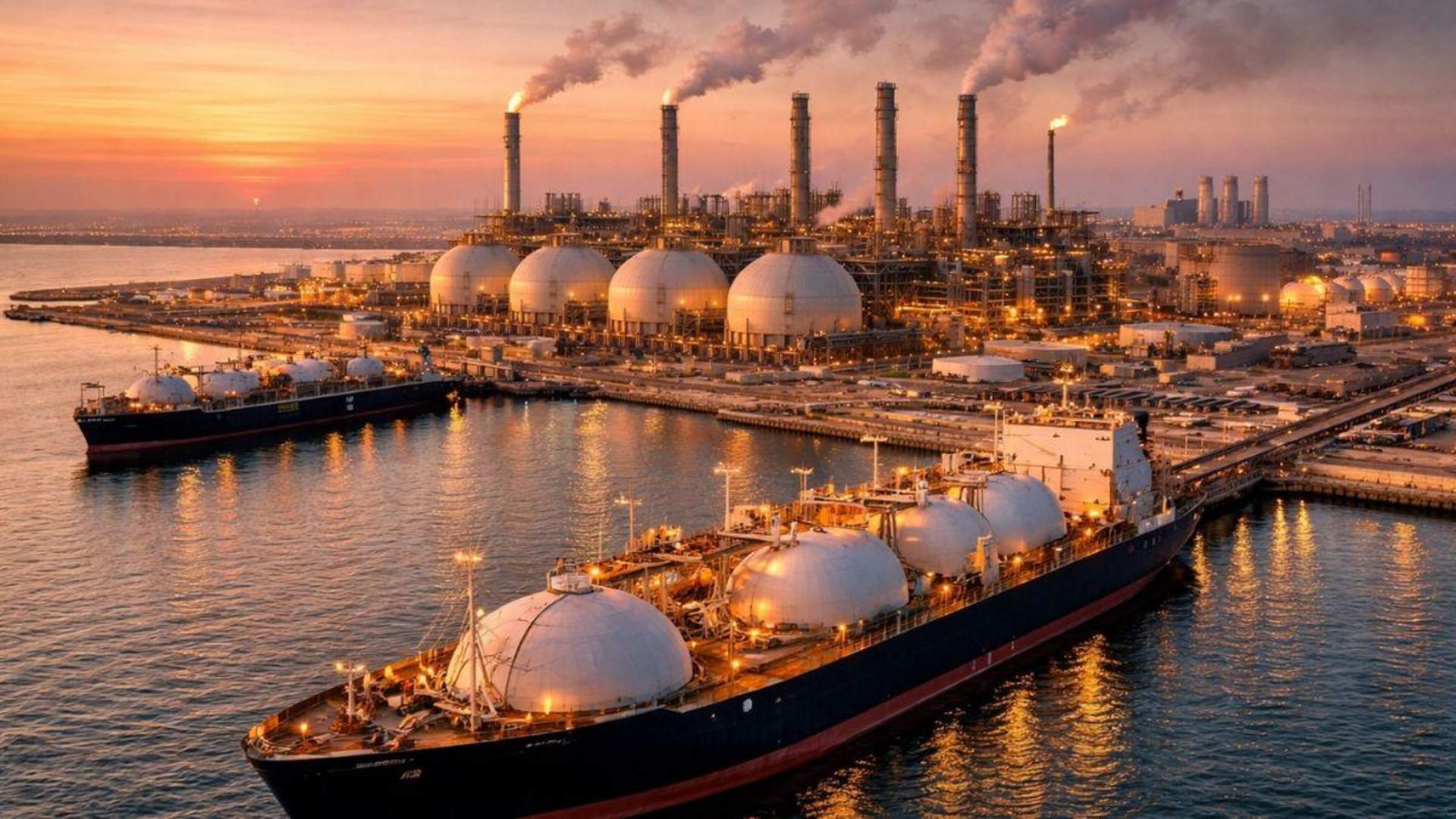
The talks took place on 11 October in Saudi Arabia, where State Minister for Power, Energy and Mineral Resources Aninda Islam Amit met Qatar’s Minister of State for Energy Affairs and QatarEnergy President and CEO Saad bin Sherida Al Kaabi. According to a report by The Business Standard, the discussions covered Bangladesh’s growing gas demand, existing LNG import arrangements and the possibility of a new long-term contract.
The immediate challenge is securing dependable fuel supplies. Qatar has historically been Bangladesh’s largest LNG supplier, but the conflict involving Iran, the United States and Israel and disruptions around the Strait of Hormuz have interrupted deliveries. For Bangladesh, which needs imported gas to support power generation, industrial production and other consumers, a new agreement could help shape energy security for years to come.
However, the latest meeting should not be mistaken for a signed deal. No confirmed new contract volume, duration, pricing formula or start date was disclosed in the reporting available on 12 October.
What Bangladesh Already Has Under Contract
Bangladesh’s existing relationship with QatarEnergy rests on long-term supply agreements that were established before the latest disruption.
Petrobangla, the state-owned gas company responsible for LNG imports, has two major long-term arrangements with Qatar-linked suppliers. Reporting by Reuters, carried by The Business Standard, identifies annual contract volumes of 2.5 million tonnes and 1.8 million tonnes, respectively.
The second agreement was signed in 2023, with additional deliveries scheduled to begin in 2026. QatarEnergy’s 2024 annual review also records a separate 15-year agreement with Excelerate Energy for 1 million tonnes of LNG annually, beginning in January 2026. Under that arrangement, Excelerate purchases LNG from QatarEnergy for delivery to Bangladesh’s floating storage and regasification units.
These agreements illustrate the scale of Bangladesh’s reliance on long-term imported gas. Contracted volumes give buyers a framework for securing supplies over several years, but they do not eliminate the risks associated with production outages, shipping interruptions or contractual force majeure.
The distinction matters because Bangladesh is now discussing possible future arrangements while also trying to manage disruption to existing ones.
The Cost Question: Contract Prices Versus Spot LNG
Price will be one of the most important elements of any new agreement.
The Financial Express reported on 9 October that QatarEnergy had agreed to supply one LNG cargo under its initial long-term contract with Petrobangla at an estimated price of about $13 per million British thermal units (MMBtu). A Petrobangla official told the newspaper that this was less than half the spot-market price in a volatile market.
That reported cargo is a useful indication of the potential value of long-term contractual supplies during a market shock. It is not, however, evidence that every existing contract has the same price or that the proposed new agreement will use the same terms.
Spot LNG prices can rise sharply when buyers compete for a limited number of available cargoes. On 14 July, S&P Global Energy reported that the Japan-Korea Marker, a benchmark for LNG delivered to Northeast Asia, had reached $19.436/MMBtu for August delivery, up from $15.167/MMBtu on 26 June.
The comparison illustrates how quickly replacement fuel can become more expensive during a supply crisis. Actual prices paid by Bangladesh depend on the applicable contract formula, delivery terms, timing and other commercial conditions.
For a new long-term deal, negotiators would need to consider the pricing benchmark, any oil-linkage formula, price reviews, destination flexibility, delivery schedules and remedies for missed cargoes. None of these terms has been publicly confirmed for the proposed agreement.
Supply Security Is About Routes as Well as Suppliers
Qatar’s importance to Bangladesh is not simply a question of how much gas it produces. It is also a question of how that gas reaches the country.
The Strait of Hormuz is a critical maritime passage for Gulf energy exports. When conflict and security risks interrupt shipping through the area, a long-term contract cannot by itself guarantee that LNG will arrive on schedule.
The effects have already been substantial. In July, S&P Global Energy reported that Petrobangla expected QatarEnergy to deliver only around half of its planned 2026 cargoes because of disruptions to Qatari production and exports. Reuters reporting published in September also described LNG buyers, including Bangladesh, looking for alternative suppliers and routes.
A new agreement could help Bangladesh secure future volumes, but its practical value would depend on the supplier’s ability to deliver under difficult conditions and on the resilience of the wider supply chain.
Bangladesh therefore has a reason to pursue two objectives together: maintaining a strong long-term relationship with QatarEnergy while broadening its access to LNG from other producers. Supplies from North America, Australia, West Africa and other regions may offer alternatives, although availability, freight costs and contract terms vary.
Diversification is not free. It can require additional negotiations, shipping arrangements and infrastructure, and alternative cargoes may cost more when the market is tight. But spreading supply across different producers and routes can reduce the consequences of a disruption concentrated in one region.
What the New Agreement Could Mean for Bangladesh
A well-structured agreement could give Petrobangla greater visibility over future supplies and reduce its need to compete for expensive spot cargoes. More predictable fuel procurement could also help energy planners manage the needs of power plants and industrial users.
Yet long-term contracts carry their own trade-offs. Buyers may face obligations to purchase agreed volumes even when demand changes, while the benefits of fixed or formula-based pricing depend on how market prices evolve. Contract flexibility, delivery security and the ability to respond to changing demand are therefore as important as the headline annual volume.
The government must also weigh LNG imports against domestic gas exploration, energy efficiency and renewable power. Imported gas can help meet immediate energy needs, but excessive exposure to international prices and shipping risks can strain foreign-exchange reserves and public finances.
The latest talks with QatarEnergy should consequently be assessed against several practical questions: How much additional gas would Bangladesh secure? When would deliveries begin? Would the pricing formula remain competitive during a market crisis? What protections would apply if cargoes could not be delivered? And would the arrangement complement efforts to diversify supply?
What Happens Next
As of 12 October, the public information available confirms discussions about a possible new long-term agreement, not a completed contract. The next meaningful developments would be the disclosure of agreed volumes, contract duration, pricing provisions, delivery schedules and any formal signing.
Until those details emerge, Bangladesh’s immediate priority remains managing existing supply commitments and obtaining replacement LNG on commercially sustainable terms.
The central lesson of the current crisis is that energy security requires more than securing a supplier. It requires contracts that balance price and flexibility, reliable shipping routes, alternative sources of fuel and a broader strategy for reducing exposure to imported energy shocks.
Sources: The Business Standard; The Financial Express; Reuters; S&P Global Energy; QatarEnergy Annual Review 2024; Petrobangla Annual Report 2022–23.

Comments
0