


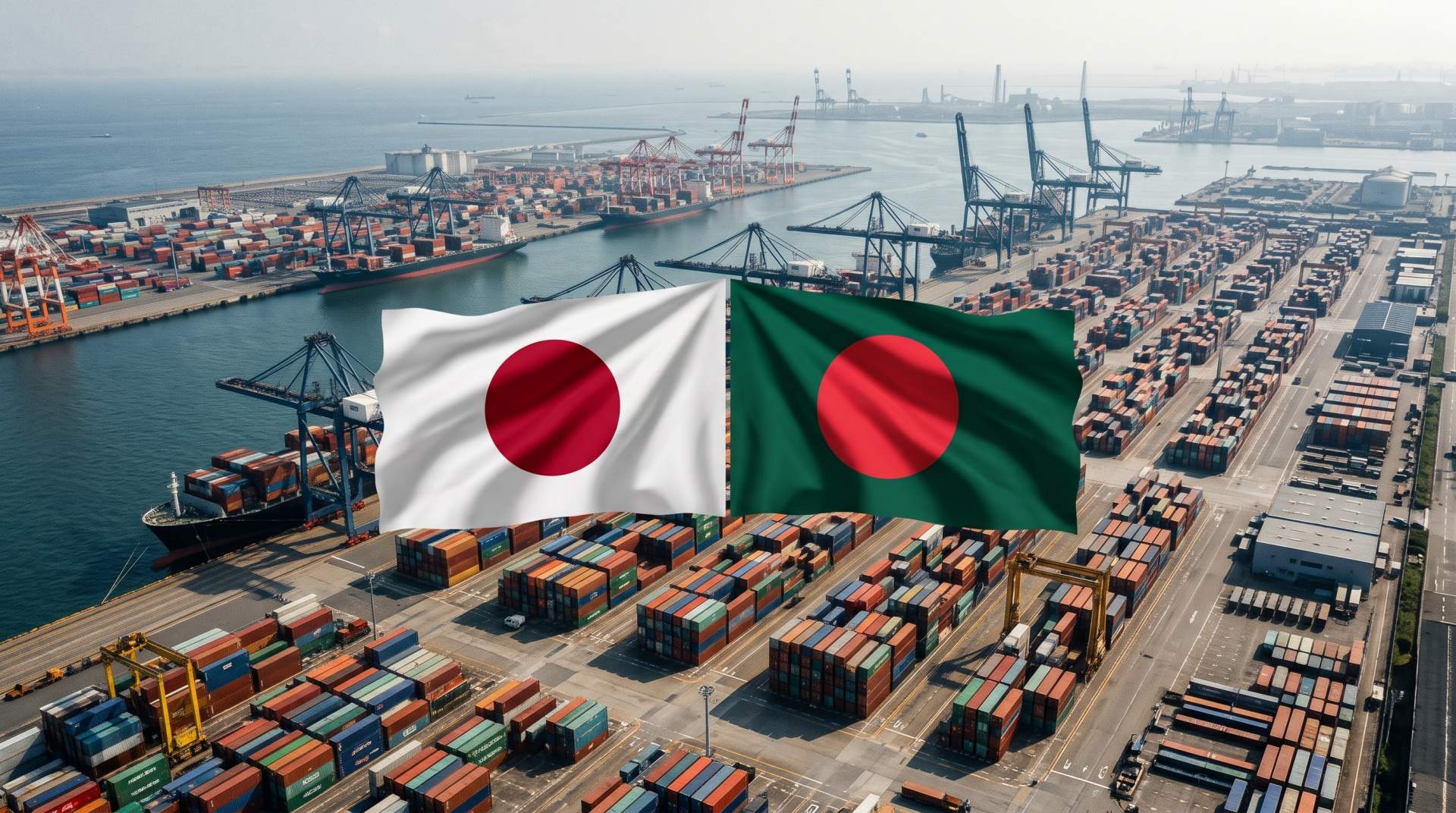
Bangladesh Prime Minister Tarique Rahman arrived in Tokyo on October 26 for a four-day official visit aimed at attracting investment, expanding trade and creating employment opportunities. His scheduled October 27 meeting with Japanese Prime Minister Sanae Takaichi will be a key moment in efforts to deepen economic ties between the two countries.
The visit comes with ambitious proposals on the table. Bangladesh has prepared a proposed $13.8 billion investment and cooperation package covering 12 priority sectors for 2026–2031. Separately, Japan is reported to be planning to arrange around 1 trillion yen, or approximately $6.35 billion, in private-sector investment in Bangladesh over five years.
These figures describe different proposals and should not be treated as money already invested or guaranteed to arrive. The immediate test for both governments is whether the visit can produce clear commitments, practical agreements and a timetable for implementation.
Investment plans extend beyond infrastructure
Bangladesh wants Japanese investment to support a broader industrial base, including manufacturing, transport, energy, technology, agriculture, pharmaceuticals and information technology.
According to Dhaka Tribune’s reporting ahead of the visit, the proposed Bangladeshi package includes $3.45 billion for transport and urban connectivity, $3.14 billion for industrial, port and commercial hubs, and $1.57 billion for manufacturing and electronics. Other proposed allocations cover energy, climate-resilient infrastructure and several additional sectors.
The scale of these proposals reflects Bangladesh’s interest in moving its economic relationship with Japan beyond development assistance and infrastructure projects towards more private investment and industrial production.
Japanese support has already played a major role in Bangladesh’s infrastructure development, including Dhaka’s metro rail, the third terminal of Hazrat Shahjalal International Airport and development around Matarbari.
The next stage would require projects that can attract businesses, support local suppliers, create productive jobs and help Bangladeshi companies become more competitive.
Automobile manufacturing and energy infrastructure are among the areas attracting attention. Dhaka Tribune reported that diplomatic sources had described a potential Toyota vehicle-assembly investment of around $500 million. The report should be treated as a proposal rather than a completed investment, pending formal confirmation and details.
Energy cooperation is also important as Bangladesh seeks reliable supplies to support industrial growth. The visit’s programme includes a planned visit to an LNG terminal and power plant in Futtsu, Japan.
Jobs depend on skills as well as investment
Employment is another major priority. Bangladesh wants to expand opportunities for its workers in Japan while improving the technical and language skills needed to compete for jobs abroad.
The two countries have previously agreed to cooperate on recruiting and preparing Bangladeshi workers for Japan’s labour market. According to earlier reporting by Dhaka Tribune, a May 2025 agreement set a goal of recruiting at least 100,000 Bangladeshi workers over five years.
The current visit is an opportunity to advance cooperation on skills development, education and recruitment procedures. However, a target should not be confused with the number of workers who have actually secured jobs or travelled to Japan.
For prospective workers, the practical benefits will depend on accessible training, Japanese-language education, recognised qualifications and transparent recruitment. Stronger safeguards against misleading job offers and excessive recruitment costs would also help workers benefit from overseas opportunities.
Investment in Bangladesh could create a different set of employment opportunities at home. Manufacturing facilities and supporting industries may need engineers, technicians, logistics workers and trained production staff. The scale of these benefits will depend on which projects are approved, when construction begins and how much local employment and supplier participation they generate.
Trade access will matter as much as investment
The two governments are also expected to discuss implementation of the Bangladesh–Japan Economic Partnership Agreement, signed in February 2026, and ways to expand access for Bangladeshi products in the Japanese market.
For Bangladesh, the opportunity is to widen exports beyond established product lines and improve the ability of local businesses to meet Japanese market requirements. Potential areas for cooperation include manufacturing, agriculture, pharmaceuticals and technology, although actual export gains will depend on demand, product standards, pricing and business capacity.
Trade agreements alone cannot guarantee higher exports. Businesses need reliable logistics, consistent quality, clear regulatory procedures and sufficient investment to compete. Government-to-government agreements can help create favourable conditions, but companies must still turn those conditions into commercial relationships.
The visit is also expected to cover cooperation in agriculture, fisheries, civil aviation, environmental protection, local government modernisation and human-resource development. Several memorandums of understanding are under discussion, although the final number and terms of any agreements will depend on what the two sides formally announce.
What happens after the visit?
The most useful measure of the visit will be what happens after the meetings end. Announced investment plans need identifiable investors, financing arrangements, project timelines and clear responsibilities. Cooperation agreements need follow-up, while worker-recruitment targets need transparent pathways into actual employment.
Bangladesh and Japan have a long-standing partnership, but the economic value of this visit will depend on implementation rather than the size of the headline figures.
For Bangladesh, success would mean more productive investment, stronger export capacity, better-skilled workers and projects that can support long-term economic growth. The coming announcements may show how far the two countries are prepared to move towards those goals.

Comments
0