


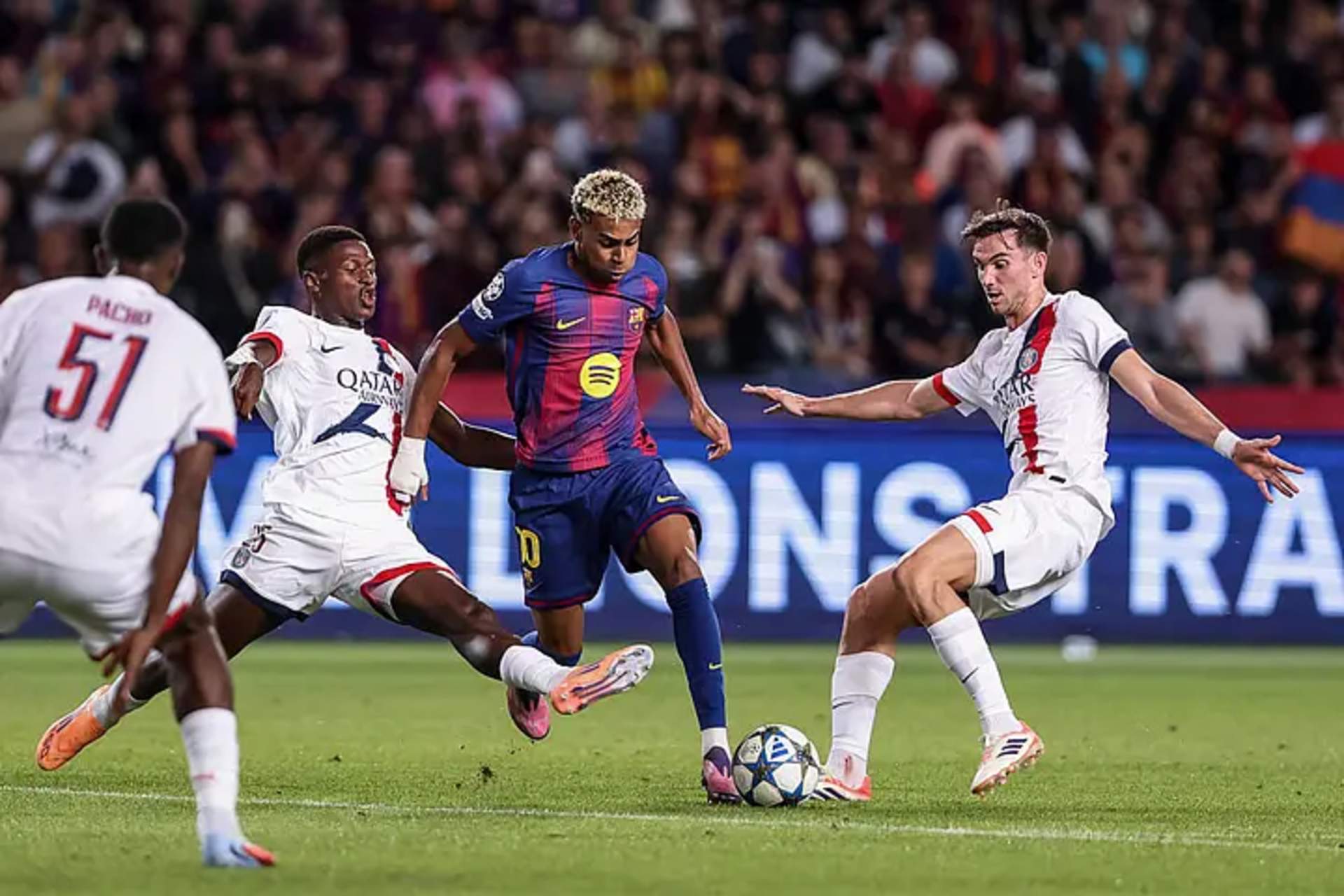
Barcelona face one of their toughest tests of the Champions League league phase on Tuesday as they prepare to visit Paris Saint-Germain with defensive injuries threatening to complicate their plans.
Coach Hansi Flick is assessing his options after Jules Koundé and Eric Garcia suffered injuries during Barcelona's match on Sunday. According to Reuters, the club had only five fit senior defenders available ahead of the European fixture, leaving Flick with important decisions to make about his starting lineup.
The meeting with Paris Saint-Germain is the headline fixture of Tuesday's Champions League schedule. It also comes before Barcelona's domestic showdown with Real Madrid, giving the Catalan club little room to relax during a demanding stretch of the season.
Flick has indicated that Raphinha could return to the starting lineup against PSG. His availability would offer Barcelona another attacking option, although the club's defensive situation remains a central concern ahead of kick-off.
Barcelona's injury problems arrive at a difficult time
The timing of the injuries is particularly challenging because the Champions League league phase rewards consistent results across several matchdays. Teams must balance the immediate need for points with the risk of exhausting players or aggravating existing injuries.
Koundé and Garcia are important options in Barcelona's defensive rotation. Their absence or limited availability could force Flick to change the back four, rely on less familiar combinations or use players outside their preferred positions.
Such adjustments can affect more than the defence itself. Barcelona often try to control matches through possession and an aggressive defensive line. That approach requires defenders to coordinate their movements, cover space behind the midfield and react quickly when opponents win the ball.
Against a side as dangerous as PSG, any disruption to those relationships could become significant. Barcelona will need to maintain their passing rhythm without allowing the home side to exploit space during transitions.
However, an injury list alone does not determine the outcome of a match. The final team selection, the availability of returning players and the tactical choices made by both managers will all influence how the contest develops.
PSG arrive with confidence after beating Manchester City
Paris Saint-Germain enter the fixture following a major European result. The French club defeated Manchester City 4-2 on October 14, demonstrating its ability to hurt a leading opponent even in a match that demanded sustained attacking quality.
That victory provides an important reference point, although it does not guarantee another positive result against Barcelona. Different opponents present different tactical problems, and the circumstances of each match can change quickly.
For PSG, the opportunity is to use home advantage and their attacking options to put pressure on a Barcelona side still working through its defensive concerns. If PSG can force turnovers and move the ball quickly into attacking areas, they may be able to test Barcelona's reshuffled back line.
Barcelona, meanwhile, will want to avoid turning the match into a sequence of open exchanges. Keeping possession, managing transitions and limiting unnecessary defensive exposure could be particularly important if Flick has fewer experienced defenders available.
The match therefore presents a tactical contest as well as a test of individual quality. PSG must find ways to attack without leaving themselves vulnerable, while Barcelona need to preserve their attacking identity without compromising defensive stability.
Why the result matters in the league phase
The 2026–27 Champions League uses a league-phase format in which teams collect points across a series of matches before the knockout places are determined. Every result contributes to the wider standings, making early consistency valuable.
Barcelona have already shown their attacking potential in Europe this season. UEFA's published results show that they defeated Galatasaray 4-1 on October 13. PSG also produced a statement performance with their 4-2 victory over Manchester City the following day.
Those results set up an intriguing meeting between two clubs with recent evidence of their attacking strength. The challenge now is to translate that form into another result against a direct European rival.
A victory would strengthen the winner's position in the league phase and provide momentum ahead of subsequent fixtures. A defeat would not settle the campaign, but it could increase the importance of results in the remaining matches.
The wider schedule matters, too. Barcelona must manage the PSG game alongside their upcoming domestic commitments, including the meeting with Real Madrid. Flick will have to weigh the need for a strong European performance against the physical demands of playing several major matches in quick succession.
What to watch when the teams meet
The first key question is Barcelona's final defensive selection. The official team sheets will establish whether Koundé and Garcia are available and how Flick chooses to organise the back line.
Raphinha's role is another point of interest. If he starts, Barcelona may gain additional pace and attacking threat, but his presence will not remove the need for disciplined defending across the team.
For PSG, the priority will be to build on their performance against Manchester City without assuming that Barcelona will offer the same openings. The home side must balance attacking ambition with the need to protect against Barcelona's ability to create chances through possession and movement.
The result will offer an early indication of how both clubs are managing the pressures of the Champions League campaign. For Barcelona, the immediate challenge is clear: find a reliable defensive solution, compete with an in-form opponent and emerge from a demanding week with their European ambitions intact.
Comments
0