


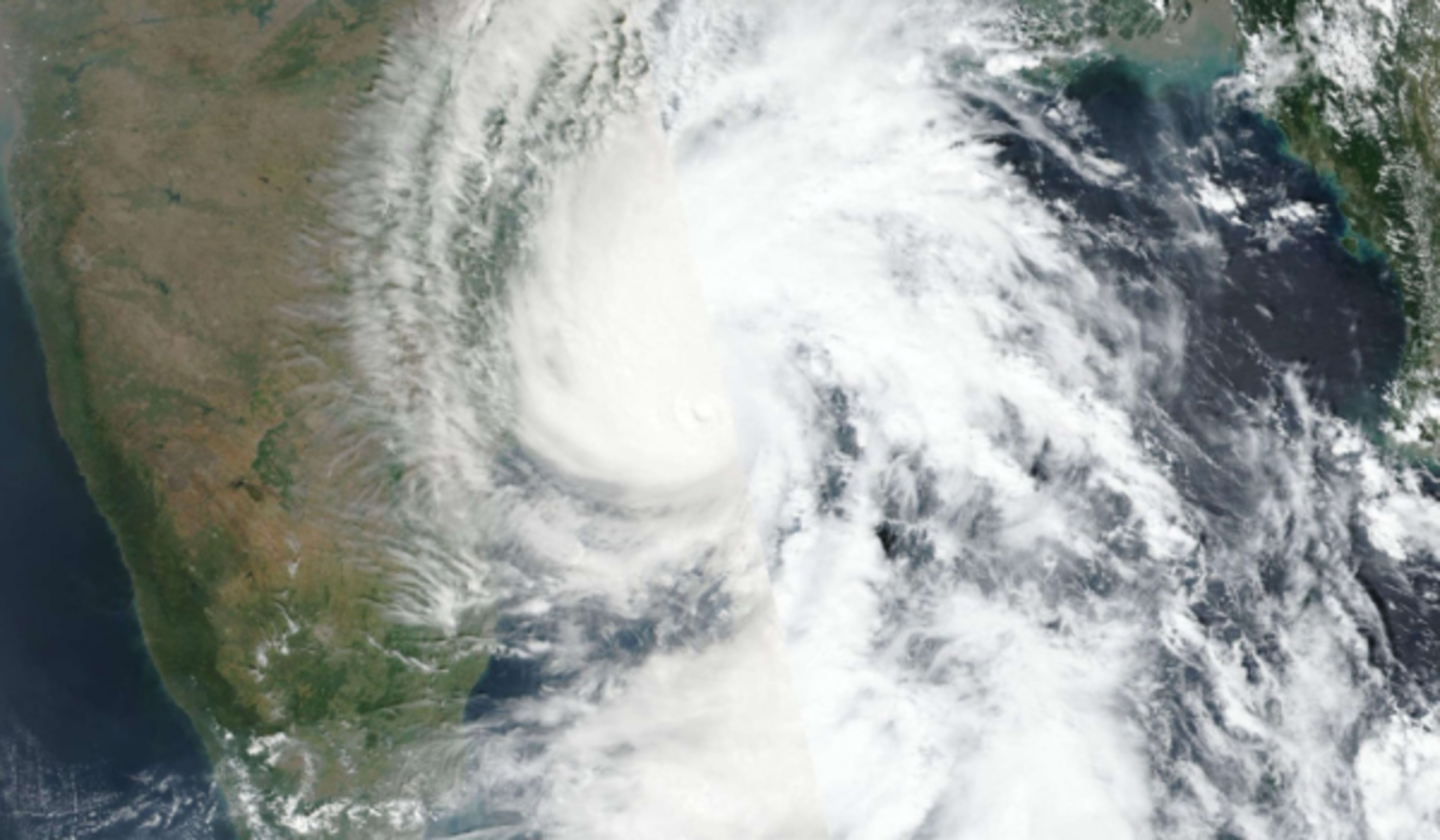
Cyclone Arnab crossed India’s Andhra Pradesh coast early on Wednesday, October 28, bringing heavy rain and strong winds to parts of eastern India, while Bangladesh faces the possibility of scattered showers, temporary gusty winds and slightly lower temperatures.
The Bangladesh Meteorological Department (BMD) said the storm was moving northwest after developing over the Bay of Bengal. Its latest forecast indicated that rain or thundershowers could occur in parts of Bangladesh over the coming hours, although the country is not expected to experience the cyclone’s direct landfall.
The forecast offers some relief from the mild heat wave affecting several parts of Bangladesh, but it also means residents should continue monitoring official weather updates.
What happened when Cyclone Arnab reached India?
India’s Meteorological Department tracked Arnab over the west-central Bay of Bengal before it approached the Andhra Pradesh coast. The storm made landfall early Wednesday, bringing heavy to very heavy rainfall and winds reaching approximately 135 kilometres per hour, according to the Associated Press.
The cyclone weakened somewhat before landfall and was downgraded from a very severe cyclonic storm to a severe cyclonic storm. It was expected to weaken further as it moved inland, although strong winds and heavy rainfall remained a concern in parts of Andhra Pradesh and neighbouring Odisha.
Indian authorities evacuated at least 89,000 people from vulnerable areas in Andhra Pradesh, opened more than 2,000 shelters and deployed medical teams as part of the emergency response. Transport services were also disrupted.
These preparations highlight the risks that powerful Bay of Bengal cyclones can pose to densely populated coastal communities, even when their paths do not directly affect neighbouring countries.
What weather can Bangladesh expect?
Bangladesh’s weather forecast indicates the possibility of scattered rain or thundershowers accompanied by temporary gusty winds. The forecast covers several divisions, including Dhaka, Khulna, Barishal, Chattogram, Rajshahi, Rangpur, Mymensingh and Sylhet.
The timing and intensity of rainfall may vary by location. The forecast does not mean every district will experience rain, nor does it establish that Bangladesh will face a direct cyclone impact.
Day and night temperatures are expected to fall slightly in many parts of the country. This could ease the mild heat wave affecting Dhaka, Khulna, Mymensingh and Sylhet divisions, along with several districts elsewhere.
Residents should follow updates from the BMD, particularly if they live in coastal areas or need to travel during periods of rain and strong winds. People working outdoors, operating boats or travelling on exposed routes should pay attention to changing local conditions.
Why the storm matters beyond India
Cyclone Arnab demonstrates how weather systems over the Bay of Bengal can affect several countries and communities as they develop and move towards land.
A cyclone’s centre may cross one coastline while surrounding weather conditions influence other areas. However, the extent of those effects depends on the storm’s position, movement, intensity and interaction with the atmosphere.
For Bangladesh, accurate forecasting remains essential for distinguishing between the possibility of rain and the threat of a direct cyclone strike. Clear communication helps residents prepare without creating unnecessary alarm.
The immediate priority is to monitor the storm’s weakening, follow updated national forecasts and avoid relying on unverified social media claims about its path or potential damage.
As Arnab moves inland over India, Bangladesh’s weather conditions will continue to depend on the latest meteorological assessments. Residents should use official forecasts rather than assumptions based solely on the storm’s proximity.




Comments
0