


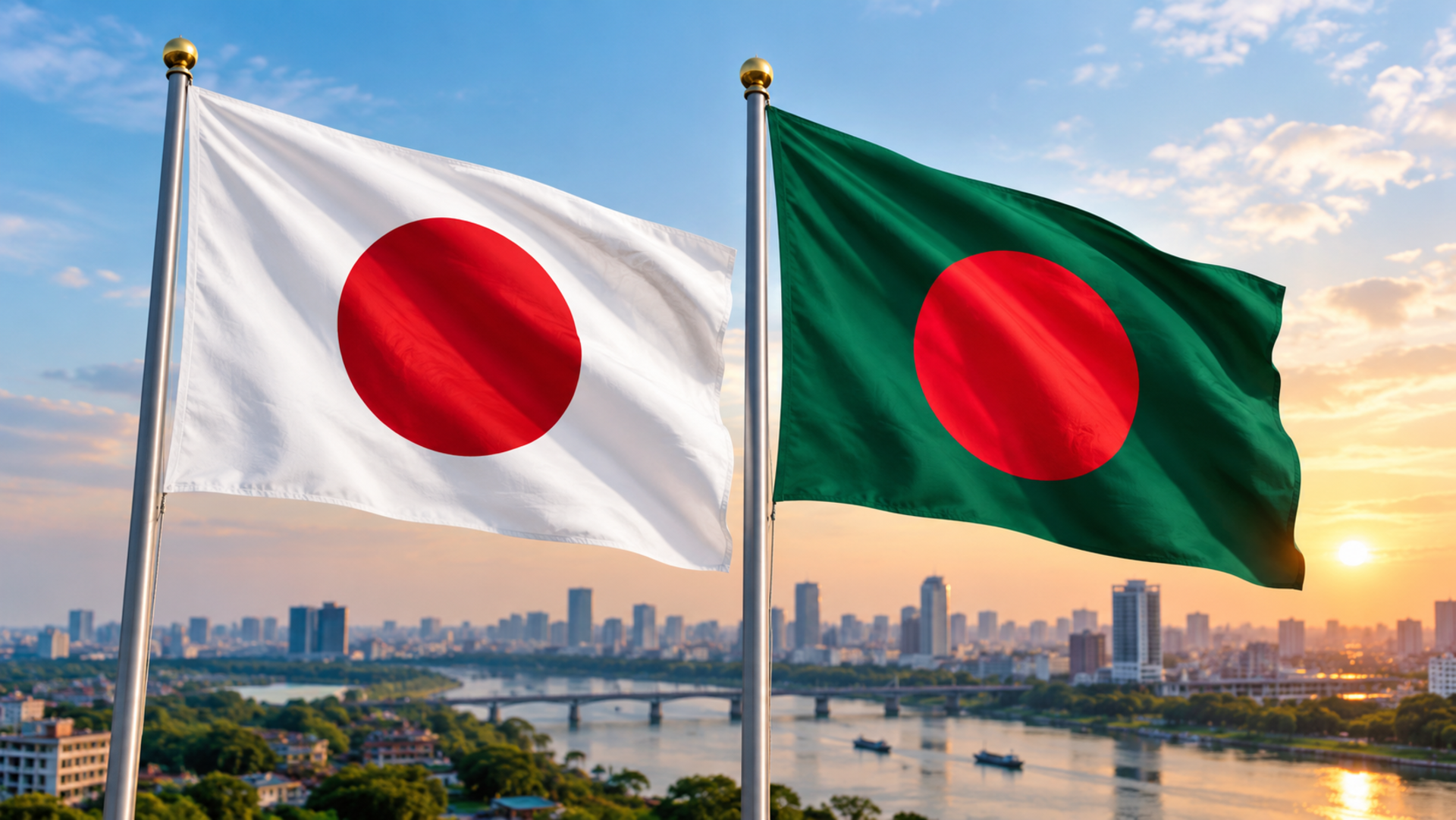
Japan is preparing to arrange approximately $6.35 billion in private-sector investment in Bangladesh over five years, a potential boost for the country’s ambitions to expand manufacturing, attract foreign capital and create skilled jobs.
The reported plan, equivalent to 1 trillion Japanese yen, could direct investment towards automobile production, other manufacturing industries and energy infrastructure. It is expected to feature in a joint statement following talks between Japanese Prime Minister Sanae Takaichi and Bangladesh Prime Minister Tarique Rahman during Rahman’s official visit to Japan from October 26 to 29.
The proposed investment arrangement was reported by Nikkei Asia and subsequently by Reuters and Bangladesh’s state news agency, BSS. As of October 23, the arrangement had not yet been confirmed through the anticipated summit statement. The distinction matters: a proposed investment framework is not the same as money already committed to individual projects or factories.
For Bangladesh, the opportunity is significant because the country needs more productive investment, stronger industrial capacity and employment opportunities for its growing workforce.
Why Japan Is Looking More Closely at Bangladesh
Japan has been a major development partner of Bangladesh for decades, supporting infrastructure, transport and economic development. The relationship is now increasingly focused on private investment, industrial cooperation and stronger commercial ties.
Bangladesh offers Japanese businesses access to a large domestic market, a substantial workforce and a location that can serve manufacturing and trade across South Asia. For Japanese companies looking to diversify their production networks, the country could become an additional base for factories and export-oriented industries.
The proposed investment arrangement is also expected to involve businesses entering the Bangladesh Special Economic Zone, developed with the participation of Japanese trading house Sumitomo Corporation.
That matters because an economic zone can offer investors a more organised setting for establishing factories, arranging logistics and connecting with suppliers. However, the actual benefits will depend on the availability of reliable electricity, efficient transport, predictable regulations and a workforce with the necessary technical skills.
The investment report also comes as Dhaka and Tokyo seek to broaden their strategic partnership. Bangladesh’s upcoming visit is expected to include discussions on trade, energy, skills development, agriculture and other areas of cooperation.
Automobiles, Manufacturing and Energy Are Key Priorities
Automobiles and other manufacturing industries are among the sectors identified in reporting on Japan’s proposed investment plan.
If projects materialise, Bangladesh could gain opportunities beyond its established export industries. Automotive manufacturing, for example, can support a network of suppliers producing components, electrical systems, metal parts, packaging and industrial services.
Building such a network takes time. Investors need confidence that local suppliers can meet quality standards, deliver consistently and operate at competitive costs. Technical training and partnerships between Japanese firms and Bangladeshi institutions could therefore be as important as the initial capital.
Energy infrastructure is another priority. Manufacturing plants need dependable electricity and, in some industries, access to specialised energy systems. Investment that improves energy supply could support wider industrial development, although the scale and timing of any benefits will depend on the projects ultimately agreed.
The reported plan should not be interpreted as a guarantee that all these investments will arrive immediately. Each project will require its own financing, approvals, commercial assessment and implementation schedule.
The Narayanganj Connection
One potential focal point is the Bangladesh Special Economic Zone in Araihazar, Narayanganj, which has been developed with Japanese participation.
The zone offers a practical example of how international investment could connect with local employment and industrial development. New factories could create direct jobs while generating additional demand for transport, warehousing, maintenance, catering and other business services.
For Narayanganj and surrounding industrial areas, the potential gains would depend on the types of factories established and the extent to which local workers and businesses can participate in their supply chains.
The challenge is to ensure that investment produces durable economic benefits rather than remaining limited to imported equipment and a small number of specialist jobs. Training programmes, supplier-development initiatives and clear labour standards can help broaden the gains.
Bangladesh also needs to compete with other countries seeking Japanese capital. Investors will compare production costs, infrastructure, market access, administrative procedures and the time required to establish operations.
The Economic Partnership Agreement Adds Another Dimension
Bangladesh and Japan signed an Economic Partnership Agreement in February 2026. Its implementation is expected to be an important subject during the prime minister’s visit.
An effective trade agreement can help businesses understand the conditions for accessing each other’s markets and plan longer-term commercial relationships. Its practical value, however, depends on the agreement’s entry into force, the details of its provisions and how companies use the opportunities available.
Bangladesh’s existing exports to Japan include substantial shipments of ready-made garments. Expanding investment into other industries could gradually diversify that relationship, but diversification will require competitive products, reliable production and stronger links between domestic businesses and international supply chains.
The summit may also provide an opportunity to discuss cooperation in skills development, agriculture, environmental protection and other areas. Such agreements could complement investment by helping prepare workers and institutions for new industrial activity.
What Bangladesh Needs to Secure the Benefits
The size of the reported investment plan makes it noteworthy, but the announcement alone will not determine its economic impact.
First, Bangladesh needs clarity on which companies intend to invest, which projects are being considered and how much private capital is actually committed. Announced investment values should be distinguished from signed project agreements, money disbursed and factories that begin production.
Second, infrastructure and administrative efficiency will matter. Investors need reliable power, accessible industrial land, efficient ports and predictable rules. Delays or unexpected costs can undermine the commercial case for projects even when initial interest is strong.
Third, employment should be measured by more than the number of factory openings. The quality of jobs, opportunities for technical advancement, local supplier participation and the development of transferable skills will help determine whether investment strengthens the wider economy.
Finally, Bangladesh will need to build lasting industrial capabilities. Japanese investment can contribute capital, technology and management expertise, but local companies and workers must be equipped to absorb that knowledge and compete in higher-value activities.
What Happens Next?
The October 26–29 visit provides an immediate opportunity to turn a reported investment initiative into a clearer framework for economic cooperation.
The key developments to watch are the wording of the joint statement, the identification of participating companies and sectors, and any subsequent agreements that establish specific projects, financing arrangements or implementation timelines.
If the proposed plan advances into real investment, Bangladesh could gain a stronger manufacturing base and new routes into international supply chains. If it remains a broad commitment without projects and delivery mechanisms, the immediate economic effects will be much more limited.
For now, the $6.35 billion figure represents a potentially important opportunity rather than a completed investment outcome. The real test will be whether the two governments and their businesses can translate diplomatic momentum into operating factories, reliable infrastructure and productive jobs.

Comments
0