


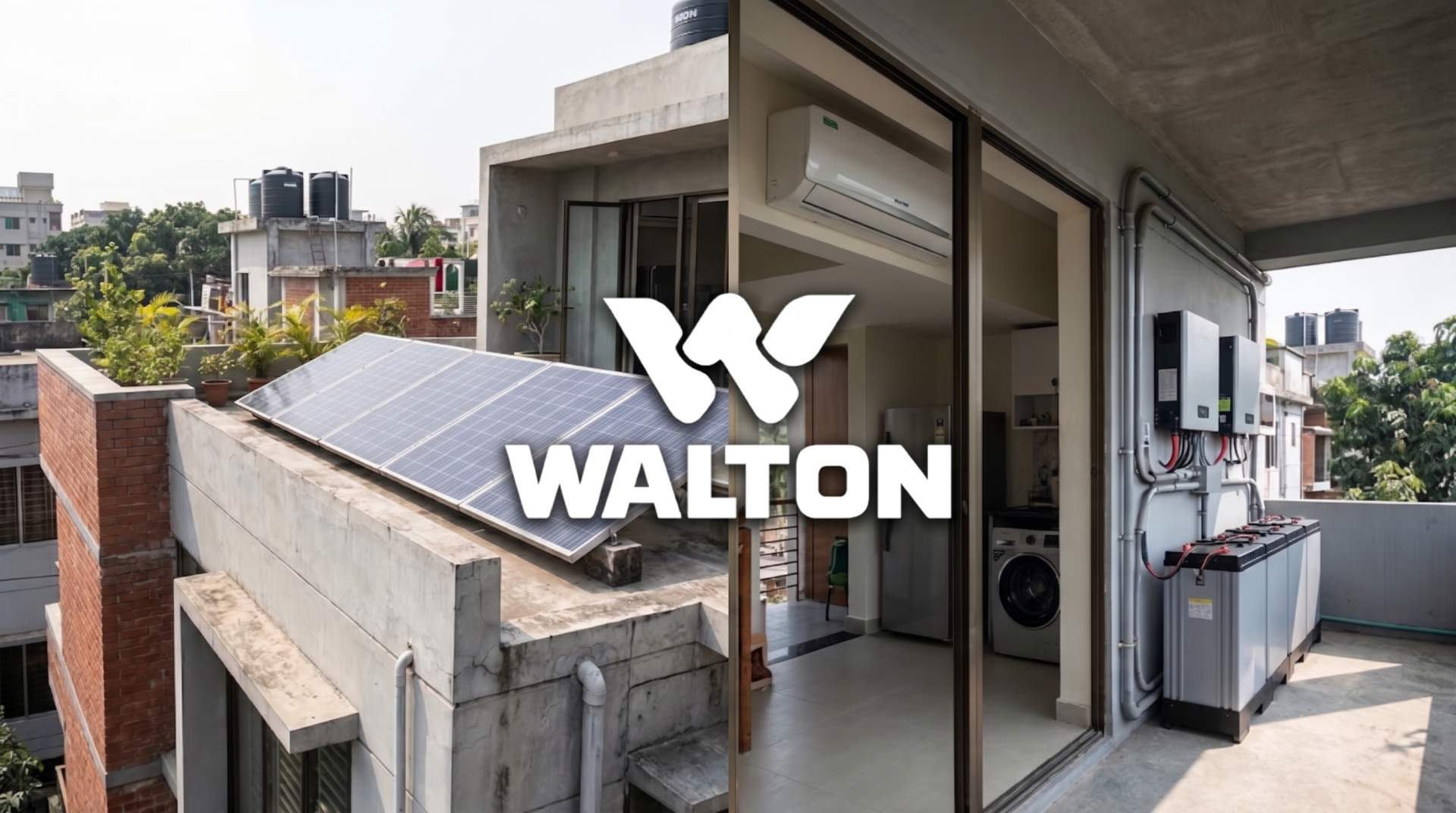
Walton has introduced an integrated solar energy system in Bangladesh that combines solar power generation, battery storage and household appliances, opening another route to reducing dependence on conventional electricity.
Bangladeshi electronics manufacturer Walton has launched an integrated solar energy system designed to power household appliances, including air conditioners, refrigerators and washing machines. The initiative, branded the Walton Solar Ecosystem, combines solar panels, inverters, energy storage batteries and compatible appliances to make solar energy more practical for homes and industrial facilities.
The system was inaugurated by Bangladesh's Finance and Planning Minister Amir Khosru Mahmud Chowdhury at Walton's corporate office in Bashundhara, Dhaka, on October 10, 2026. The launch brought together renewable energy generation, storage technology and consumer electronics under one integrated initiative.
The development comes as Bangladesh seeks ways to diversify its energy supply, manage electricity costs and reduce dependence on imported fuels. Although solar power has long been used for lighting and small electrical devices, Walton's initiative highlights its potential for operating larger household appliances.
How Walton's Solar Ecosystem works
The system brings together several components: solar panels that generate electricity, inverters that convert and manage power, batteries that store energy, and appliances designed to work with solar power.
According to reporting on the launch, Walton showcased hybrid air conditioners and refrigerators, alongside washing machines and other household products. Some of the hybrid appliances can use both solar electricity and conventional grid power. When solar generation is insufficient, grid electricity can help meet the remaining demand, depending on the system configuration.
This arrangement is important because solar generation changes throughout the day. Panels generally produce more electricity in strong sunlight and less during cloudy weather or at night. Storage batteries can help bridge that gap, while a grid connection provides another source of electricity where available.
The system is therefore not simply a solar panel attached to an ordinary appliance. Its practical performance depends on the compatibility of the appliances, inverter capacity, battery storage, available sunlight and household electricity consumption.
Walton's launch exhibition featured solar panels, solar power cables, storage inverters and batteries, as well as hybrid air conditioners, refrigerators, washing machines, smart televisions, electric cookers, ovens, rice cookers, fans, LED bulbs and streetlights.
The range suggests that the company is seeking to develop a broader solar-powered product ecosystem rather than focus on a single appliance category.
What it could mean for household electricity bills
Air conditioners and refrigerators are important electricity users in many homes. Washing machines, cookers and other appliances add to demand, although their consumption varies according to the model, usage pattern and operating conditions.
Using solar electricity for part of this demand could reduce the amount of power purchased from the grid. The potential savings, however, will differ from one household to another.
A home with sufficient rooftop space, strong sunlight and a suitably sized solar installation may be able to generate a meaningful share of its electricity during the day. A household that operates an air conditioner for long periods, particularly after sunset, may need a larger battery or continued access to grid power.
The upfront cost also matters. Solar panels, batteries, inverters, installation and maintenance all contribute to the total investment. Battery capacity is especially relevant for households that want to operate appliances when sunlight is unavailable.
Walton's launch announcement did not establish a universal installation price, a guaranteed percentage reduction in bills or a standard payback period for every household. Consumers will need product-specific specifications and a system quotation to determine whether the investment makes financial sense for their circumstances.
Walton's investment in solar energy
The company is also developing its own solar energy capabilities. At the launch event, Walton Vice-Chairman SM Ashraful Alam said the company was generating 32 megawatts of solar electricity.
Walton Chairman SM Shamsul Alam said the company's factories had rooftop solar panels supplying electricity to its operations and the national grid. Managing Director SM Mahbubul Alam also discussed plans to manufacture solar panels and inverters in Bangladesh, alongside a lithium-ion battery manufacturing facility.
He said domestically produced batteries were expected to become available in the following month. That was a forward-looking statement made at the October 10 launch; actual market availability and product specifications require separate confirmation.
Local manufacturing could help expand the domestic supply chain for renewable energy equipment. Its eventual effect on consumer prices will depend on production costs, component sourcing, competition, distribution and after-sales service.
The initiative also illustrates how an electronics manufacturer can extend its business beyond individual appliances into power generation, storage and energy management.
A wider opportunity for Bangladesh
Solar energy could contribute to Bangladesh's energy mix by diversifying electricity sources and reducing the need for some fossil-fuel-based generation. For households and businesses, the value of a solar installation depends on how much electricity it generates, how effectively that electricity is used and the cost of the equipment.
There are practical considerations beyond the purchase price. Buyers need to check appliance compatibility, inverter ratings, battery capacity, installation requirements, warranty terms and the availability of maintenance services. They should also establish whether a proposed system can operate independently during a grid outage or requires a functioning grid connection.
The possibility of supplying surplus electricity to the national grid can also influence the economics of a solar installation, but eligibility and payment arrangements depend on applicable rules and the specific connection agreement.
For now, Walton's Solar Ecosystem represents a move towards combining renewable electricity with everyday household technology. Its broader significance will depend on how affordable the systems become, how reliably they perform and whether consumers can achieve measurable savings over their operating lives.



Comments
0