


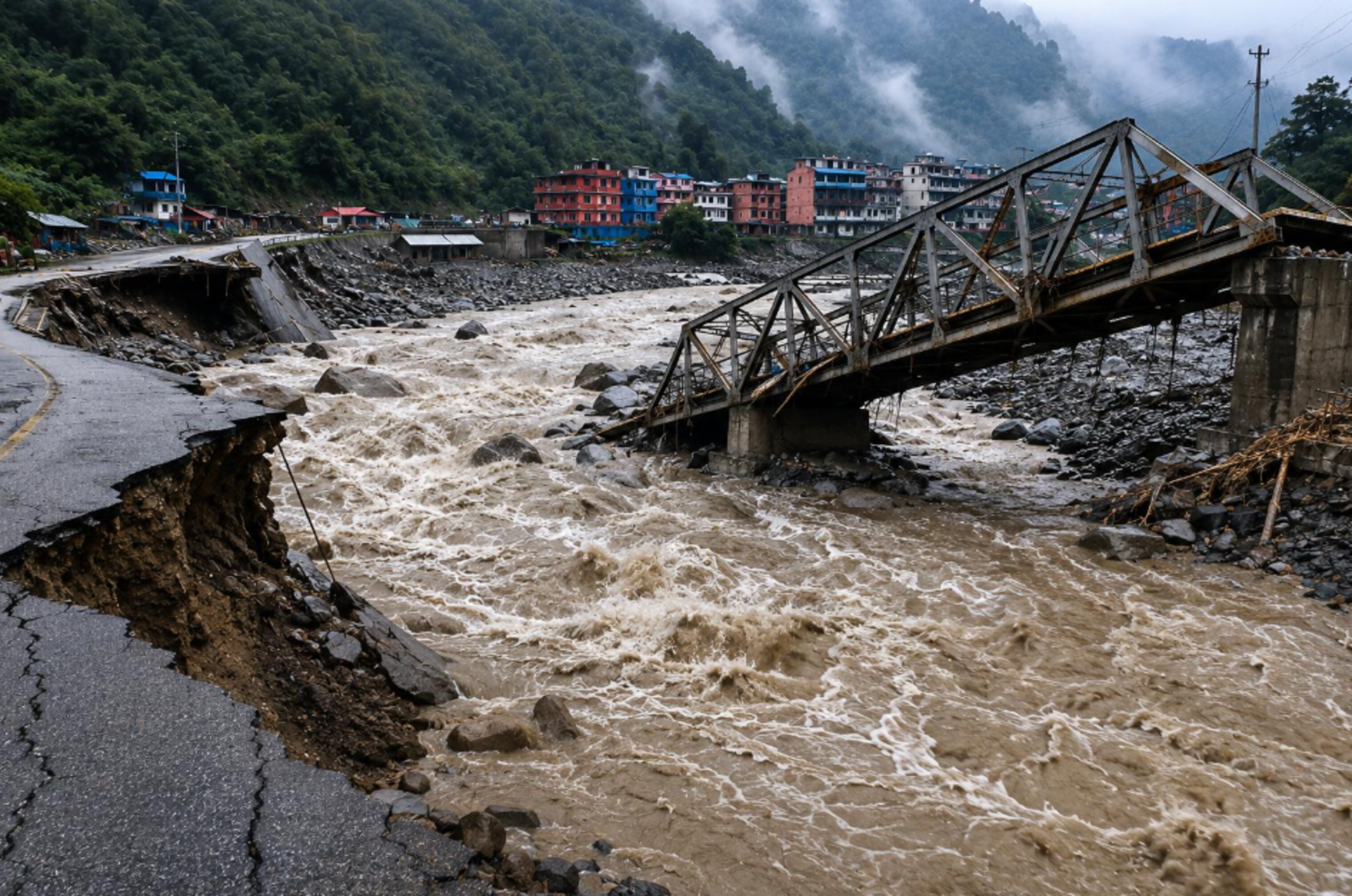
The UN’s loss-and-damage fund has taken its first major step towards supporting a country after a climate-related disaster. But Nepal’s recovery bill shows how far international climate finance remains from the scale of the crisis.
A new United Nations climate-finance decision has put a difficult question back at the centre of the global climate debate: what happens when a disaster-struck country needs billions of dollars to recover, but international support covers only a fraction of the cost?
On 22 October, the board of the Fund for Responding to Loss and Damage agreed to set aside $20 million for Nepal following devastating floods in August. The decision is a significant milestone for a fund created to help vulnerable developing countries address the consequences of climate change. It is not, however, an immediate cash transfer, nor does it come close to meeting Nepal’s estimated reconstruction needs. Reuters and AFP reported the decision on 22–23 October.
The contrast is stark. Nepal estimates that recovery and reconstruction following the disaster could cost more than $4.7 billion. The proposed $20 million represents less than half of one per cent of that total. For communities facing damaged roads, bridges, schools and energy infrastructure, the difference between an international pledge and the resources required to rebuild is enormous.
A landmark decision, but not the end of the process
The August disaster struck Nepal’s Bhotekoshi–Trishuli region after an ice-and-rock avalanche triggered destructive downstream flooding. The event caused extensive damage and loss of life, with official reporting describing thousands of people dead or missing and tens of thousands affected.
Nepal requested emergency assistance from the loss-and-damage fund on 31 August. After weeks of discussion, the board held an extraordinary meeting on 22 October and agreed to invite the government to submit a proposal for the money.
That distinction matters. The board’s decision establishes a route towards assistance, but Nepal must still present a funding proposal for consideration and approval. The process therefore leaves a critical question unanswered: how quickly can the money reach affected communities?
The fund was established under the UN climate process after years of pressure from developing countries. Its purpose is to address climate-related harm that cannot be fully avoided through emissions reductions or adaptation alone. This includes destruction of infrastructure and livelihoods, as well as other losses associated with increasingly severe climate impacts.
The Nepal decision is a test of whether that promise can translate into practical support when a disaster happens. Climate advocates have welcomed the move while warning that the fund’s resources and procedures remain inadequate for the scale of need.
Why the funding gap matters beyond Nepal
The issue is especially relevant to Bangladesh, where climate-related risks include cyclones, floods, river erosion, salinity intrusion and extreme heat. These hazards can damage homes and infrastructure, interrupt livelihoods and force families to spend savings on recovery.
Bangladesh also faces a financing challenge: support for climate-related losses is spread across government spending, humanitarian assistance, development finance and private resources. A September 2026 policy brief from Practical Action argues that these channels remain fragmented and that major gaps persist, particularly for non-economic losses and slow-onset impacts. The brief calls for a more coordinated, risk-informed approach to financing loss and damage.
Nepal’s experience offers a practical lesson for countries such as Bangladesh. Having a global fund is important, but its effectiveness depends on more than announcing allocations. Funding must be large enough to matter, accessible without excessive delays and directed towards locally identified needs.
For disaster-prone communities, the timing of assistance can shape the recovery itself. Delays may leave households unable to repair homes or resume work, while damaged public infrastructure can disrupt education, transport and access to services. These are broader consequences of a financing system that struggles to move at the speed of a disaster.
The debate over who should pay
Loss-and-damage finance also raises a question of responsibility. Many climate-vulnerable countries have contributed relatively little to the greenhouse-gas emissions driving global warming, yet face substantial costs from climate impacts.
Developing countries have long argued that international climate finance should reflect this imbalance. The fund was created after difficult negotiations at UN climate conferences, but its available resources remain modest compared with the scale of global need. AFP reported that government pledges to the fund totalled about $822 million at the time of the Nepal decision.
The debate is not simply about the size of one grant. It is about whether the international system can establish reliable support for countries that experience severe climate-related losses—and whether assistance can be delivered without each disaster requiring an exceptional political negotiation.
Some developed-country representatives have cautioned against treating the Nepal decision as an automatic model for future cases. Developing-country representatives, meanwhile, have pushed for the experience to inform a faster and more dependable response system. The fund’s longer-term operating model is expected to remain a subject of discussion at its next board meeting.
From symbolic progress to usable support
The $20 million allocation is both progress and a warning. It shows that the loss-and-damage fund can respond to a specific disaster, but it also reveals the distance between the current system and the financial demands of recovery.
For Bangladesh, the lesson is not that Nepal’s funding decision guarantees future assistance. It does not. Rather, the case highlights the importance of strong national plans, clear assessments of climate-related losses and financing arrangements that can connect international commitments to real needs on the ground.
Bangladesh will also need to coordinate domestic resources, development partners and other funding channels while continuing to press for effective international climate finance. Private-sector contributions may help, but they cannot automatically replace public funding or resolve the question of responsibility for climate-related harm.
The next measure of success will be whether Nepal can turn the board’s decision into approved, accessible funding—and whether the fund learns from the process. For climate-vulnerable countries, the real test of climate finance is not the announcement. It is how much support arrives, how quickly it arrives and whether it helps people rebuild.


Comments
0