


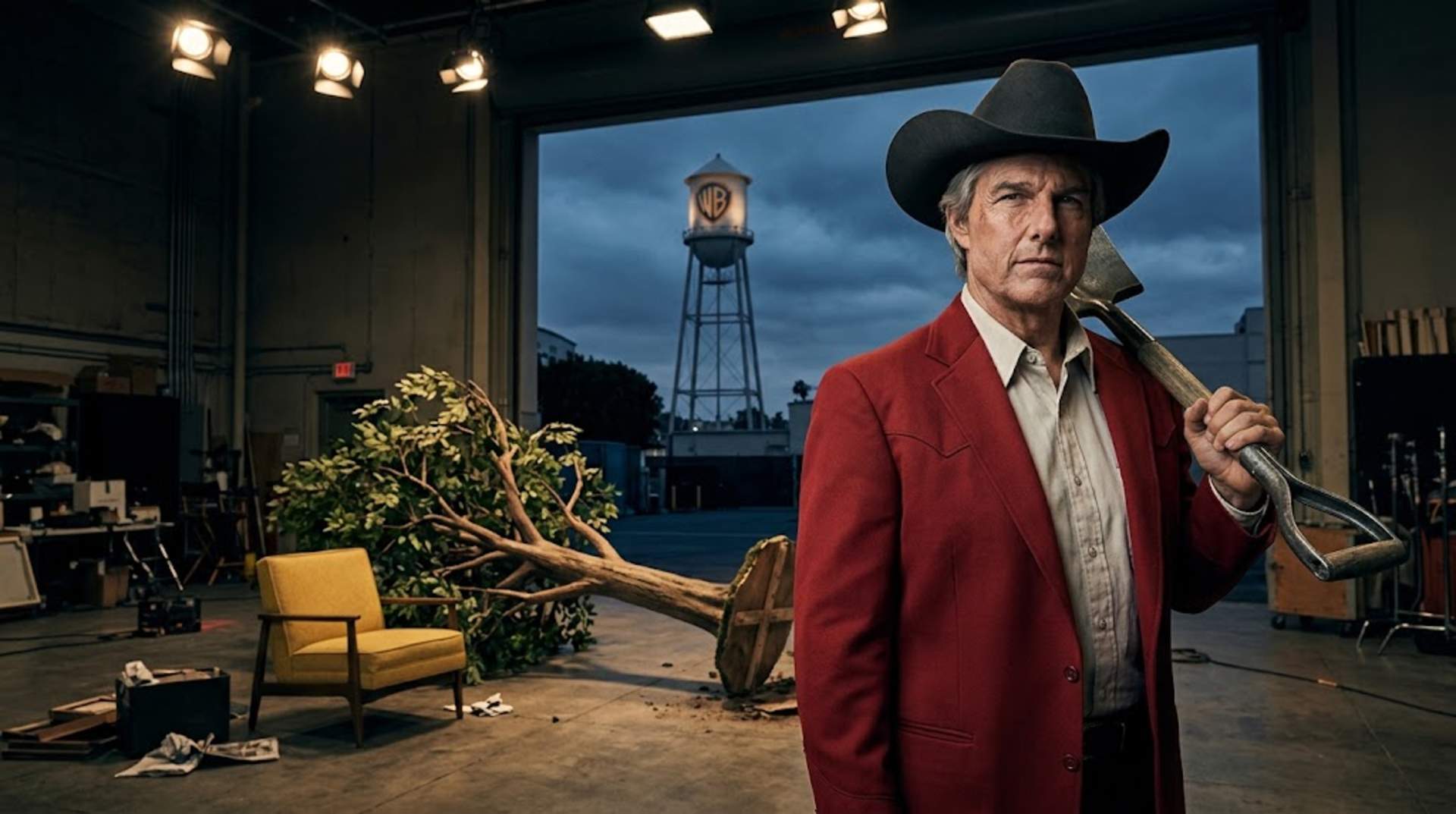
The Digger box office bomb has handed Tom Cruise his worst domestic opening weekend in nearly two decades, leaving Warner Bros. staring at a projected $150 million to $200 million loss on the exact week the 103-year-old studio ceases to exist as an independent company.
Released across roughly 3,300 North American theaters on October 2, the R-rated absurdist dark comedy directed by two-time Oscar winner Alejandro G. Iñárritu collected just $8 million domestically over its first three days. Adding $12 million from 74 international markets brought its global debut to $20 million, a fraction of the $126 million North American opening Cruise achieved with Top Gun: Maverick in 2022.
In North America, Digger finished fifth on the weekend chart, trailing far behind Amazon MGM Studios' $40 million Colleen Hoover adaptation Verity, which opened at number one with roughly $32 million to $33 million. For Cruise, who both starred in and produced the project, it marks his lowest domestic launch since the 2007 political drama Lions for Lambs debuted to $6.7 million.
The Unforgiving Studio Math Behind the Digger Box Office Bomb
When Warner Bros. Motion Picture Group co-chairs Michael De Luca and Pamela Abdy greenlit Digger, the project was pitched as a bold return to auteur-driven cinema for Cruise, who spent the past decade headlining Mission: Impossible and Top Gun sequels. Instead, the film's financial collapse has become a textbook case study in why major studios rarely fund nine-figure original satires.
How much Digger actually cost to make is already a subject of dispute in Hollywood. While studio sources and trade estimates cited by The Playlist and Deadline peg the net production budget at $125 million after British tax incentives, Variety reported on Tuesday that an extended shoot between November 2024 and May 2025 pushed the true production price tag to between $160 million and $180 million.
On top of filming costs, Warner Bros. spent roughly $100 million on a global marketing campaign that included a Royal Film Performance in London's Leicester Square and bookings across IMAX and Dolby Cinema screens. Because movie theaters typically keep around half of every ticket sold, studio executives told Variety the film needed between $300 million and $350 million in worldwide ticket sales just to break even in theaters.
With ticket sales collapsing on opening weekend, analysts now doubt Digger will reach $50 million globally. A comprehensive financial breakdown published by Deadline and reported by Eastern Eye estimates total project expenses, including home entertainment and television distribution overheads, at $275 million against roughly $127 million in expected lifetime revenue across all windows, leaving the studio with a net loss of approximately $148 million.
How a Stage-Play Twist Alienated Mainstream Audiences
Part of the commercial rejection stems from the gap between what audiences expect from a Tom Cruise movie and what Iñárritu put on screen. Co-written by Iñárritu alongside Birdman collaborators Nicolás Giacobone and Alexander Dinelaris Jr., plus Mexican playwright Sabina Berman, the 128-minute film initially presents Cruise as Digger Rockwell, an egotistical oil billionaire whose reckless drilling in Greenland triggers a planet-threatening ecological disaster.
Roughly half an hour into the story, however, a prop tree tips over on screen and exposes a meta-theatrical twist. The ecological apocalypse is not real; instead, viewers are watching a chaotic dress rehearsal for an in-universe satirical stage play titled Fossil Fools, with Cruise playing a neurotic actor named Curtis Markson alongside an ensemble cast featuring Riz Ahmed, Sandra Hüller, John Goodman, Jesse Plemons, and Michael Stuhlbarg.
While a handful of critics praised Cruise's manic comedic performance as his sharpest dramatic turn since Magnolia in 1999, mainstream moviegoers and trade reviewers balked at the self-referential conceit. Writing for The Hollywood Reporter, chief film critic David Rooney noted that the movie illustrated the line between a big creative swing and "hubristic folly" more starkly than any studio release since Francis Ford Coppola's Megalopolis.
As reported by CBC News, even Warner Bros.' conservative pre-weekend projections of $12 million to $15 million proved too optimistic once word of mouth spread from Thursday night previews. Cruise, for his part, stood behind the film publicly over the weekend, thanking the cast and crew on social media and stating that he remained "so proud of what we created."
A Costly Curtain Call as Paramount Skydance Takes Over
The Digger box office bomb lands at a historic inflection point for Hollywood's corporate hierarchy. Digger is the final standalone theatrical film released by Warner Bros. Discovery before its $111 billion acquisition by David Ellison's Paramount Skydance Corporation closes on Tuesday, October 6.
Ahead of the merger's completion, Bloomberg and industry newsletter Puck reported that Warner Bros. film chiefs De Luca and Abdy will exit the company rather than join the combined studio structure. De Luca and Abdy had earned goodwill across the creative community earlier in their tenure with box office hits like Sinners and One Battle After Another, and by signing Cruise to annon-exclusive production pact at Warner Bros. in early 2024.
Under the new corporate structure, Ellison plans to keep Paramount Pictures and Warner Bros. as distinct studio labels producing roughly 30 theatrical films a year combined, with creative oversight consolidated under Paramount Pictures co-chairs Dana Goldberg and Josh Greenstein. For the incoming leadership team, the lesson of the Digger box office bomb is blunt: even the biggest movie star of the modern era cannot rescue a $160 million art-house experiment when audiences feel tricked by the premise.




Comments
0