


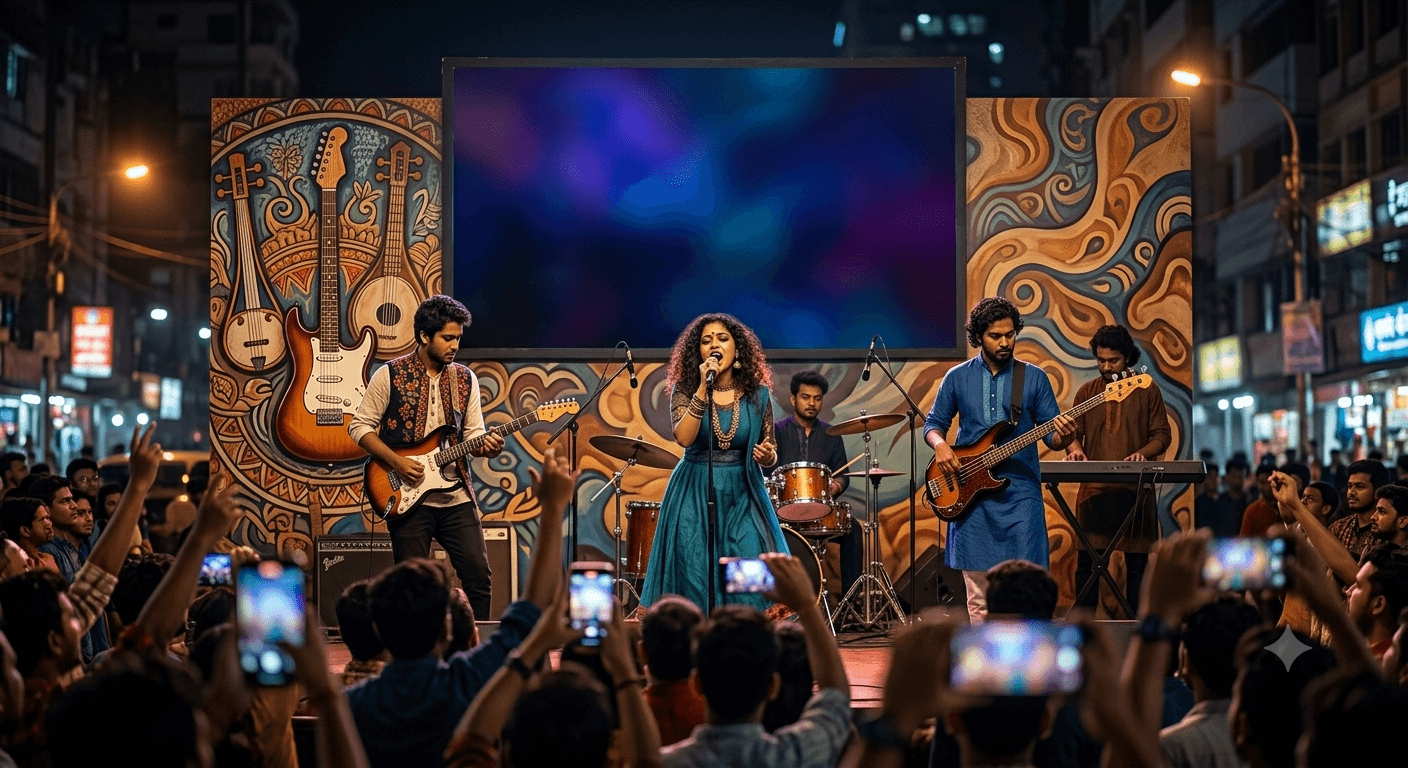
The Dhaka band scene has undergone a remarkable transformation over the past three decades. During the 1990s and early 2000s, the landscape was dominated by heavy metal, hard rock, and stadium-sized anthems characterized by powerful guitar distortion, soaring vocals, and large-scale live performances.
By the mid-2020s, a new generation of artists began reshaping the sound of the city. Indie alternative music, folk fusion, and ambient influences emerged as defining characteristics of the contemporary scene. Acoustic instrumentation, poetic storytelling, and intimate live venues gradually replaced the arena-focused energy of earlier decades, reflecting changing audience tastes and cultural priorities.
Today, the Dhaka band scene represents a blend of tradition and experimentation, balancing local musical roots with modern global influences.
The Acoustic Renaissance: Reimagining Folk Fusion
The most defining characteristic of this music revival is the organic re-integration of traditional Bangladeshi acoustic roots into contemporary frameworks. Instead of simply covering classic baul or spiritual tracks with loud electric guitars, modern indie artists are engaging in deep ethnomusicological blending.
Traditional instruments like the dotara (four-stringed lute), khamak, dhol, and deep bamboo flutes are no longer relegated to historical showcases. Instead, they are being layered over modern indie-pop chord progressions, ambient synth pads, and complex, syncopated drum grooves. This creates a fascinating sonic dichotomy: music that feels deeply ancient and rooted in Bengal's soil, yet perfectly adapted for modern, high-fidelity headphones.Post-Rock and Urban Alienation: The Indie Alternative Sound
Simultaneously, urban alternative bands are moving away from the soaring, operatic vocal styles of classic rock, opting instead for introspective, poetic realism. The lyrics of this new wave focus heavily on the psychological realities of modern youth in Dhaka: urban alienation, the exhaustion of navigating a megacity, campus life, and complex emotional landscapes. Musically, these bands draw clean lines from international post-rock, shoegaze, and indie-folk. They use spacious guitar delays, muted bass lines, and unconventional time signatures, prioritizing emotional texture and atmospheric depth over aggressive, fast guitar solos.The New Infrastructure: Playlists and Intimate Gigs
This subcultural explosion has been accelerated by a completely restructured distribution ecosystem:- Streaming Democratization: The localized curation of Spotify and YouTube music algorithms has allowed underground, self-produced acts to bypass traditional record labels and radio gatekeepers entirely, finding their niche audiences overnight.
- The Intimate Venue Revolution: Massive, logistically exhausting open-air stadium concerts have partially given way to intimate, indoor, acoustically controlled venue gigs. Small auditoriums, cafes, and independent cultural spaces across Dhaka host weekly curation showcases.


Comments
0