


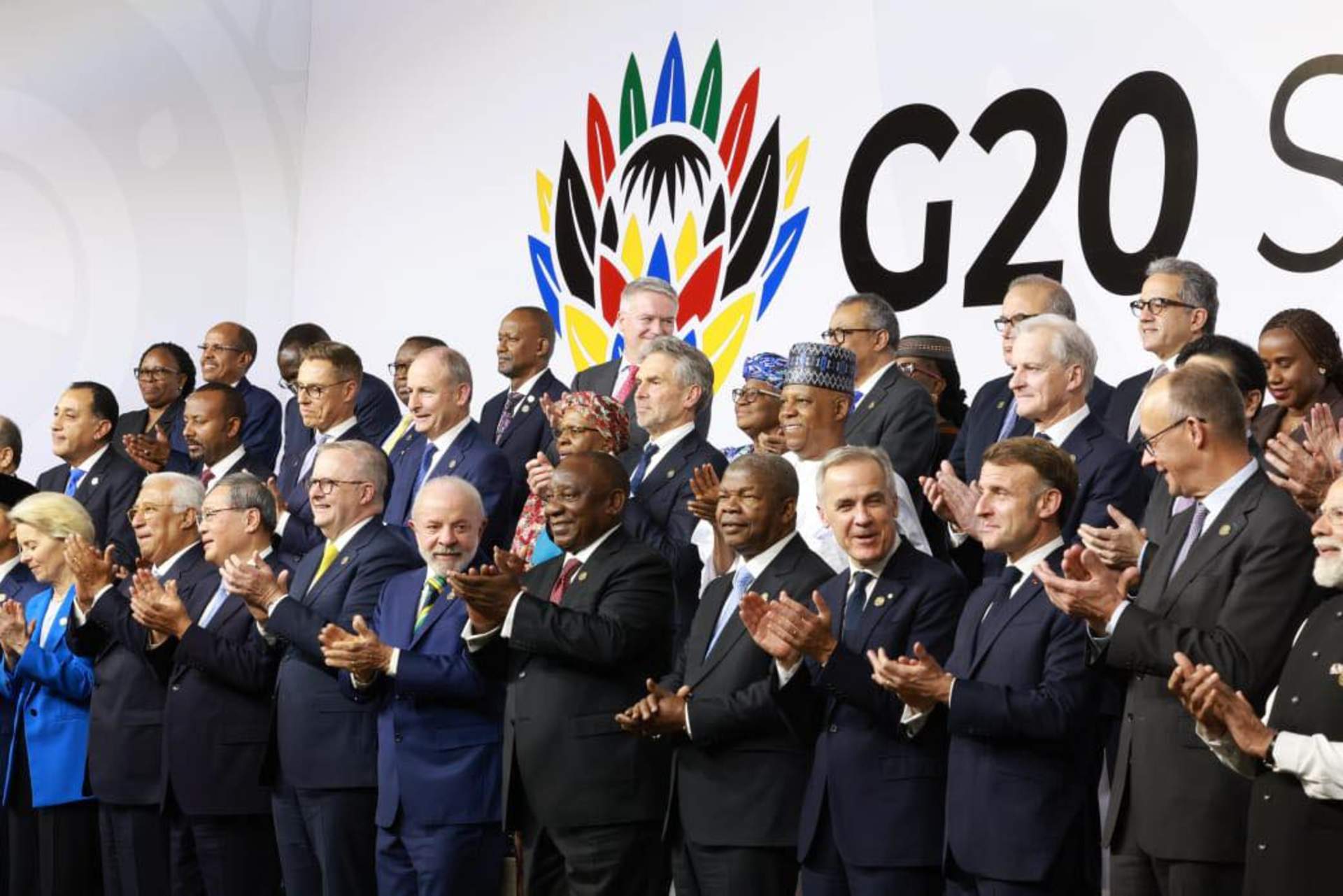
Foreign ministers from the Group of 20 major economies are meeting in Atlanta, Georgia, on October 30–31 as conflicts, trade disputes and maritime security concerns threaten international stability and economic cooperation.
The meeting, chaired by US Secretary of State Marco Rubio, is intended to advance discussions on shared economic and security challenges ahead of the G20 leaders’ summit scheduled for December 14–15 in Miami, Florida.
However, significant disagreements among participating countries could limit the scope for a unified response to the crises confronting the global economy.
Wars and Maritime Security Dominate the Agenda
The Russia-Ukraine war, the conflict involving the United States, Israel and Iran, US tariff policies, and tensions in the South China Sea are among the major issues complicating international cooperation.
Washington has identified freedom of navigation as a priority, with discussions expected to address strategic waterways including the Strait of Hormuz, the Red Sea, the Black Sea and the South China Sea.
These routes are important for international trade and energy transportation. Disruptions can increase shipping risks, complicate supply chains and place additional pressure on energy markets.
The US administration has also highlighted food security, energy security and the resilience of supply chains, including those for critical minerals.
The agenda reflects the close relationship between geopolitical stability and economic performance. Conflict or restrictions affecting major shipping routes can have consequences well beyond the countries directly involved.
Russia and China Present Diplomatic Challenges
Russian Foreign Minister Sergey Lavrov is attending the Atlanta meeting, while China is represented by a deputy foreign minister rather than its top diplomat.
Russia’s participation has raised concerns among some Western countries because of the continuing war in Ukraine. The presence of Russian officials could complicate efforts to establish a common position on the conflict.
Ukraine and South Africa were not invited to this year's Atlanta gathering, according to the Associated Press. Ukraine has participated in previous G20 meetings despite not being a member, while South Africa chaired the group in 2025.
The diplomatic differences extend beyond individual conflicts. Governments also disagree over trade policies, the global economic order and the balance between national economic interests and international cooperation.
Why the Meeting Matters for the Global Economy
Energy supplies, maritime transport and international trade are central to the discussions because disruptions in one area can affect several others.
For countries dependent on imported fuel, fertiliser, food or industrial raw materials, instability along major shipping routes can increase costs and create uncertainty for businesses and consumers.
Supply-chain resilience is another concern. Governments are seeking ways to protect access to strategically important materials while navigating disagreements over tariffs, industrial policy and international competition.
The G20 provides a forum for major advanced and emerging economies to discuss these shared challenges. Its members include countries with substantial differences in foreign policy and economic priorities, making agreement difficult but cooperation potentially consequential.
What Happens Next?
The October 30–31 ministerial meeting is expected to help shape the agenda for the December G20 leaders’ summit in Miami.
The immediate test is whether participating governments can identify practical areas of cooperation even when they disagree over wars, sanctions, trade and regional security.
A broad consensus on the most contentious geopolitical issues appears unlikely, according to the Associated Press. More limited progress on maritime security, energy supplies, food security and supply chains could nevertheless provide a basis for further discussions.
The meeting's significance will ultimately depend on what participating governments can agree to do, rather than the statements they make about the importance of cooperation.


Comments
0