


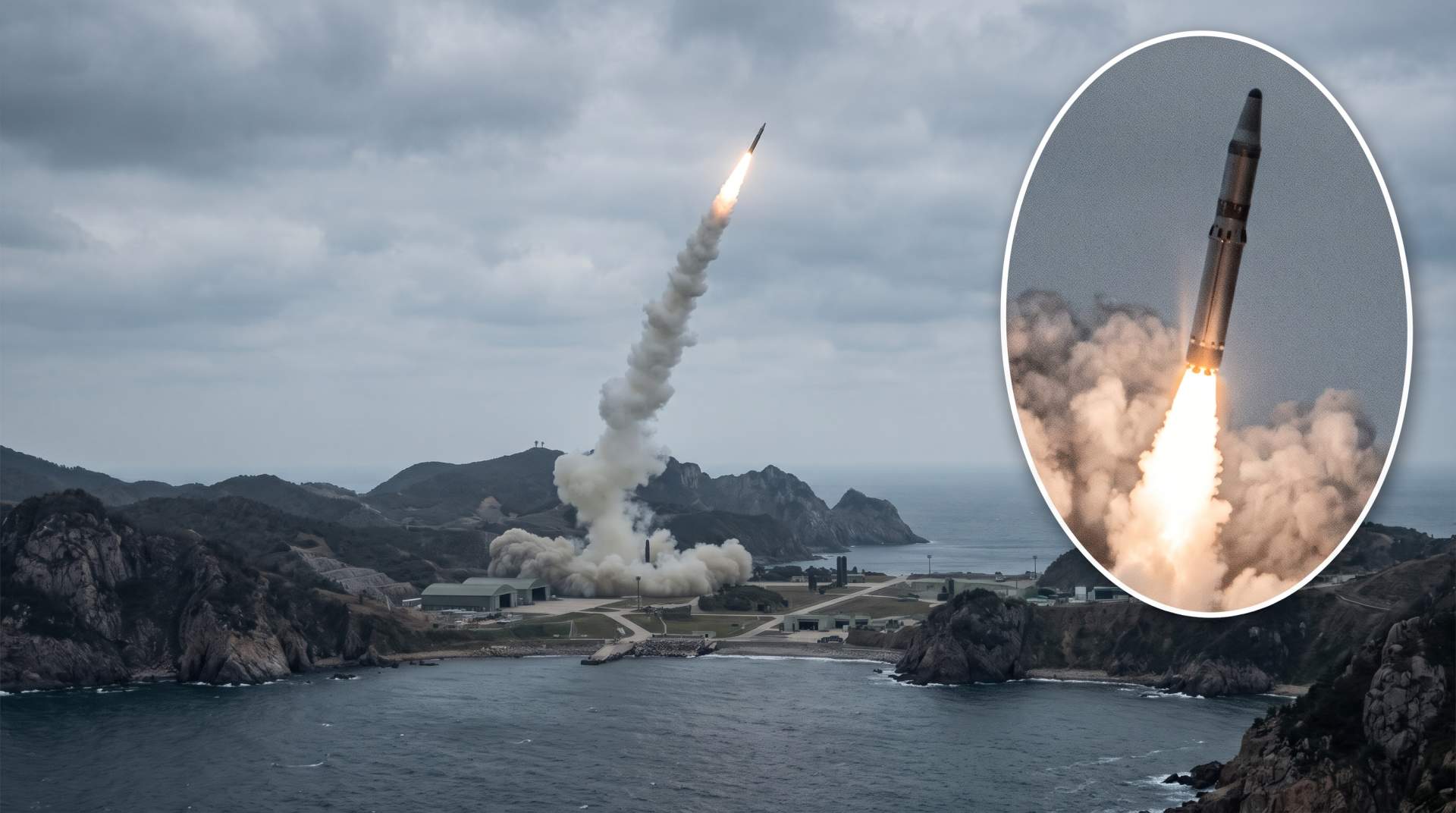
North Korea fired more than 10 short-range ballistic missiles towards the sea off its eastern coast on Thursday, October 29, according to South Korea’s military, raising fresh concerns about security on the Korean Peninsula.
South Korea’s Joint Chiefs of Staff said the missiles were launched from the Wonsan area at around 12:30 p.m. local time. The military said it had strengthened surveillance and remained prepared for possible additional launches.
South Korean, US and Japanese authorities were sharing information about the launches and maintaining a readiness posture, according to South Korean military statements reported by regional media.
The latest activity adds to a series of North Korean weapons tests this year as tensions persist between Pyongyang and Seoul.
What happened during the latest launch?
South Korean authorities identified the weapons as short-range ballistic missiles. The missiles were launched towards the East Sea, also known internationally as the Sea of Japan.
Japan’s Defence Ministry and Coast Guard also reported a possible ballistic missile launch, with the projectile reported to have fallen into the sea outside Japan’s exclusive economic zone.
The exclusive economic zone is an area in which a coastal country has specific rights over natural resources, although it is not the same as territorial waters.
The available reports did not establish any damage or casualties resulting from Thursday’s launches. Details about the missiles’ individual flight paths and performance were not immediately available in the initial reporting.
The incident highlights the importance of monitoring missile activity across Northeast Asia, where the security interests of North Korea, South Korea, Japan and the United States overlap.
A pattern of weapons testing
Thursday’s launches followed North Korea’s previous ballistic missile launches on October 12, according to Reuters. During that earlier episode, some missiles reportedly travelled more than 900 kilometres.
North Korea has continued developing and testing weapons while facing international opposition to its nuclear and missile programmes. Its activities have prompted repeated concerns among neighbouring countries about military preparedness and the risk of escalation.
Missile tests can serve several purposes, including evaluating weapon performance, improving operational capabilities and demonstrating military strength. However, the specific objectives behind Thursday’s launches were not established in the available reporting.
The latest incident also comes amid wider tensions along the inter-Korean border. South Korean authorities have accused North Korea of responsibility for land mines that injured South Korean soldiers in September. Pyongyang has denied responsibility, according to earlier Associated Press reporting.
Those tensions provide important context, but the available evidence does not establish that the missile launches were directly connected to the border incident.
What happens next?
South Korea’s military said it was maintaining surveillance and preparing for possible further launches. Continued information-sharing among South Korea, the United States and Japan will be important as authorities assess the latest activity.
Key questions remain about the missiles’ precise characteristics, the purpose of the launch and whether North Korea will conduct additional tests.
For regional governments, the immediate challenge is to monitor military developments while avoiding miscalculation. A missile launch does not automatically mean that a wider conflict is imminent, but repeated weapons tests can increase pressure on defence planning and diplomatic relations.
Further official statements may clarify the technical details of the launches and whether the incident leads to additional military or diplomatic responses.



Comments
0