


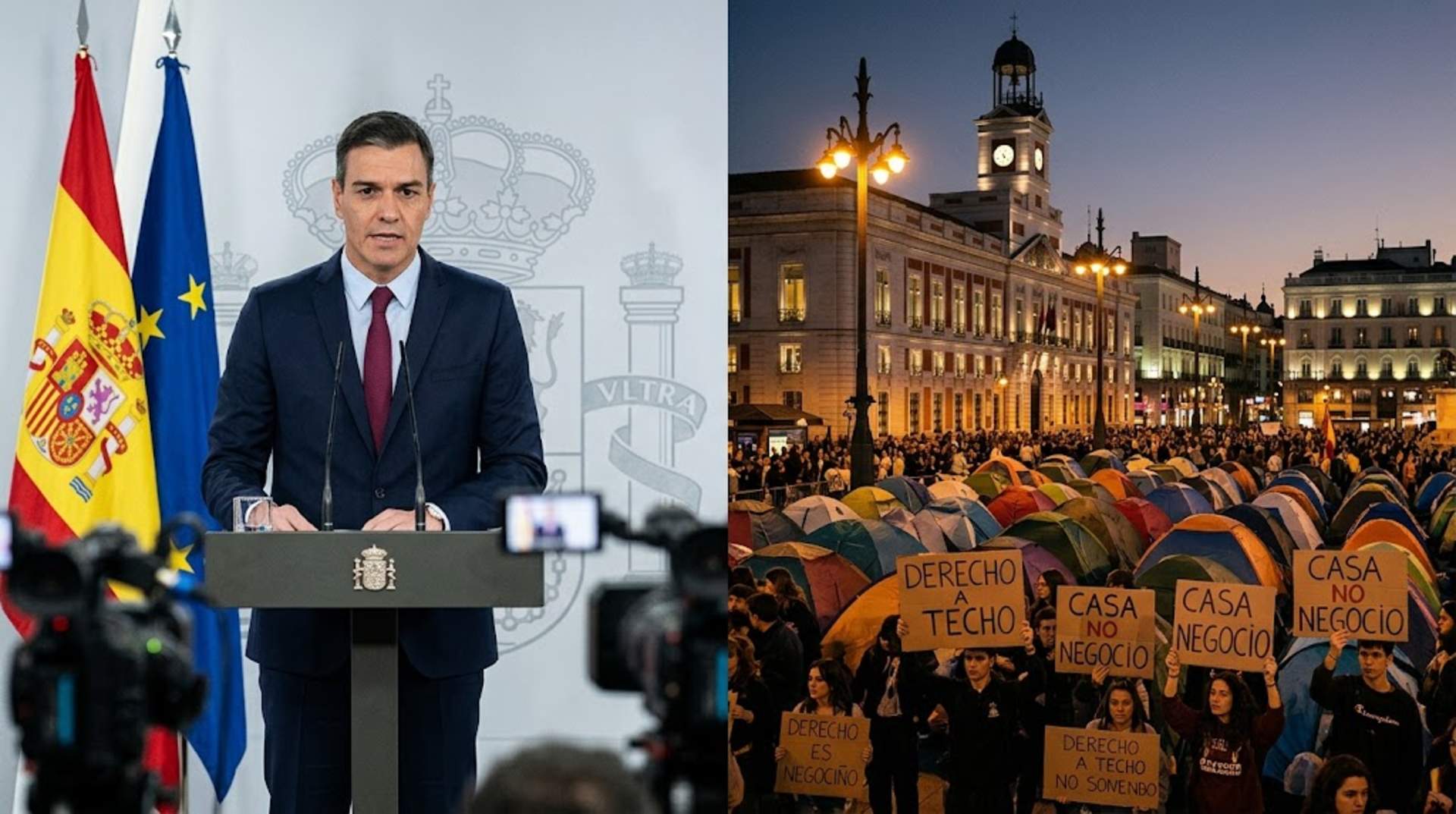
A Spain snap election will take place on Sunday, November 29, after Socialist Prime Minister Pedro Sánchez dissolved parliament on Monday following the defeat of his government's emergency housing package and days of mass street protests across the country.
Speaking in an institutional address from La Moncloa Palace in Madrid on October 5, Sánchez brought forward a national vote that had not been due until 2027. The decision came three days after conservative and Catalan nationalist lawmakers joined forces in the Congress of Deputies, Spain's lower house of parliament, to strike down two royal decree-laws designed to freeze evictions and curb real-estate speculation.
"It is up to you now," Sánchez told voters during his televised remarks, according to The Guardian. By calling a snap vote, one of Europe's longest-serving progressive leaders is making a high-risk political gamble: betting that public fury over unaffordable rents will rally left-wing voters and prevent a conservative coalition from taking power.
How One Madrid Eviction Sparked a National Revolt
The political crisis that toppled Spain's legislative calendar began on September 23 in a downtown Madrid apartment building. That morning, courts enforced the eviction of 87-year-old María del Carmen Abascal from the flat where she had lived for seven decades after a real-estate investment company purchased the property.
Abascal's removal had been made possible earlier in the year, when opposition parties voted in April 2026 to end a pandemic-era moratorium on vulnerable tenant evictions. Footage of the 87-year-old being forced from her home turned her into an overnight symbol of Spain's deepening affordability squeeze, where surging tourist rentals, institutional property buying, and stagnant wages have priced young workers and pensioners out of major cities.
Within days of the eviction, protesters pitched tents in Madrid's Puerta del Sol, the capital's central plaza. By September 30, the Madrid encampment had grown past 1,200 tents, according to PBS NewsHour, while solidarity camps sprang up in Barcelona's Plaça de Catalunya and Málaga's Plaza de la Constitución.
Why the Emergency Housing Decrees Failed in Parliament
Under intense pressure from tenant unions and his own left-wing coalition partner, Sumar, Sánchez rushed two emergency packages, including Royal Decree-Law 26/2026, before the 350-seat Congress of Deputies on Friday, October 2. In Spain, the cabinet can issue royal decree-laws to respond to urgent crises, but the measures expire unless parliament ratifies them within 30 days.
The government's emergency housing plan proposed five major interventions:
A ban on evicting vulnerable tenants until 2030.
A prohibition on distressed-debt investment firms, widely referred to in Spain as "vulture funds," from purchasing residential housing until 2028.
Mandatory two-year extensions on residential rental contracts set to expire before the end of 2028.
Stricter rules on short-term and single-room leases used by landlords to bypass standard rent caps.
A value-added tax (VAT) hike to 10 percent on tourist apartments, paired with higher municipal property taxes.
Despite a last-minute appeal by Sánchez from the parliamentary floor, the decrees were voted down. The conservative People's Party (PP) and the far-right Vox party opposed the package, joined by Together for Catalonia (Junts), a center-right Catalan separatist party whose seven lawmakers have repeatedly held the balance of power since the inconclusive 2023 general election.
Conservative lawmakers argued that state controls only shrink the supply of rental homes. Juan Bravo, a senior People's Party legislator, told parliament that housing becomes affordable by building more homes rather than passing decrees. As opposition deputies cheered the bill's defeat inside the chamber, housing activists in the visitors' gallery tossed leaflets onto the floor and thousands marched through Madrid and Barcelona over the weekend.
The Political Math Behind the Spain Snap Election
For Sánchez, who has governed for eight years by stitching together fragile minority coalitions, the Friday defeat proved that his parliamentary majority was exhausted. Rather than endure months of legislative paralysis while trailing in opinion polls, he chose to turn the November 29 Spain snap election into a direct referendum on housing rights and the prospect of a right-wing government.
The electoral math remains daunting for the ruling coalition. Current polling projections cited by CBC News and Reuters suggest Sánchez's Socialist Party (PSOE) and the left-wing Sumar alliance are on track to win roughly 112 seats, well short of the 176 required for a parliamentary majority in the 350-seat chamber. On October 4, parties within the Sumar movement announced they would launch a unified "Broad Front" electoral platform on October 17 to consolidate progressive voters before the November ballot.
Meanwhile, the opposition enters the seven-week campaign convinced that its moment has arrived. People's Party leader Alberto Núñez Feijóo welcomed the election call on Monday, framing the campaign not around rent controls, but around border migration pressures in Ceuta and judicial investigations involving figures close to the prime minister's administration and family, allegations that Sánchez and his relatives have denied as politically motivated harassment.
"At last, the Spanish people will decide," Feijóo said on Monday. Vox leader Santiago Abascal also praised the decision, though he cautioned right-wing voters against taking opinion polls for granted.
Sánchez has survived seemingly impossible electoral odds before, most notably in July 2023 when he called a surprise snap vote after regional election losses and prevented a predicted conservative landslide. Whether he can repeat that comeback on November 29 will depend on whether thousands of young Spaniards sleeping in tents across Madrid and Barcelona translate street anger into ballots, or whether voter fatigue hands power to Spain's right.



Comments
0