

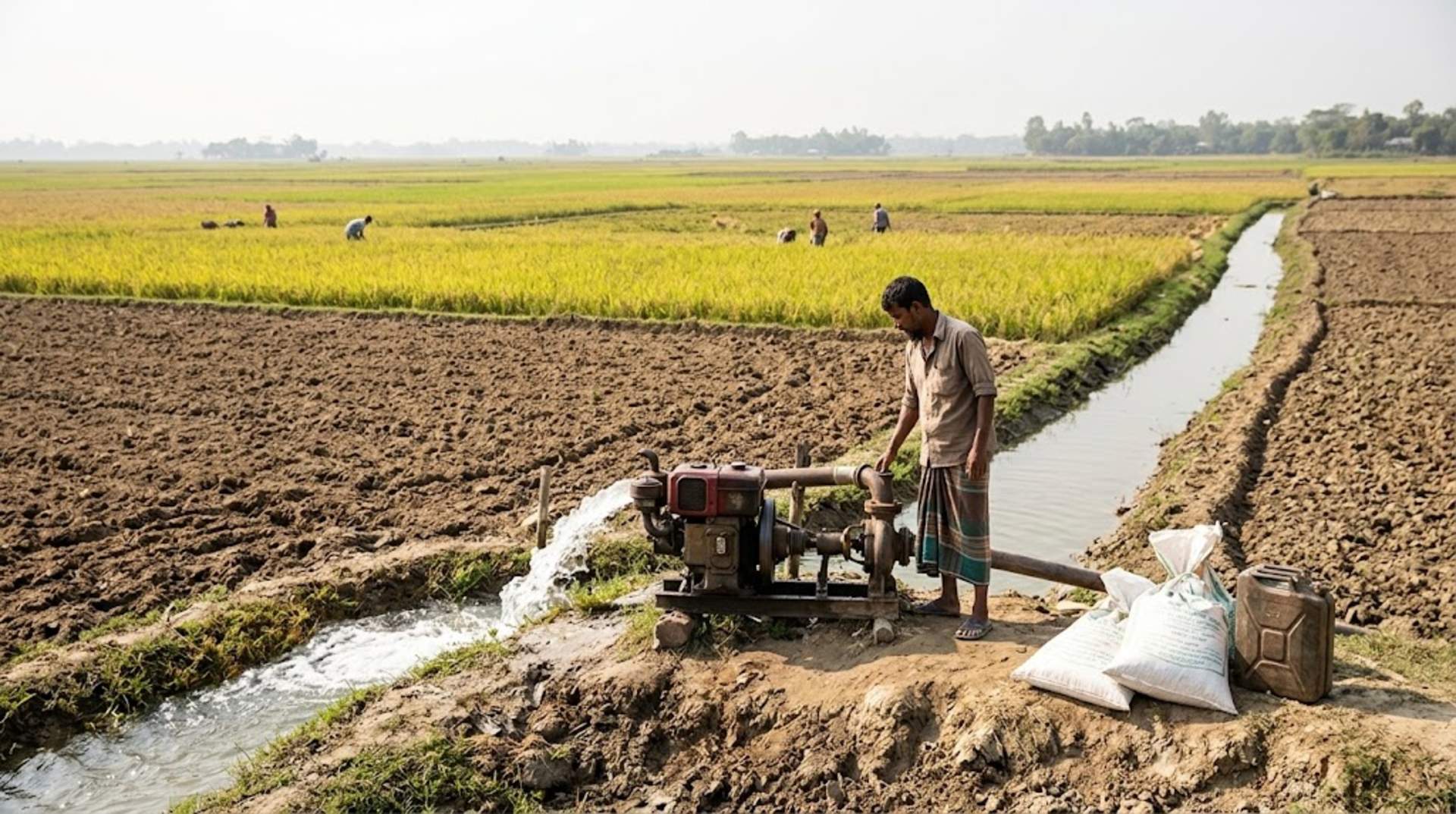
On paper, the harvest numbers underpinning Bangladesh food security in October 2026 look reassuringly solid. According to the latest production estimates from the Food and Agriculture Organization (FAO), Bangladesh is on track to harvest 6.19 crore tonnes of paddy this year, roughly 5 percent above the four-year national average, following a strong spring Boro harvest that nearly matched record output.
Look beyond the granary totals to the household kitchen and the village bazaar, however, and a far more fragile picture emerges. A UN-backed food security assessment reported by The Daily Star on Sunday, October 4 projects that the number of people in Bangladesh facing acute food insecurity will jump 18 percent to 1.81 crore between September and December 2026, up from 1.53 crore during the May-to-August period. Within that group, roughly 7.87 lakh citizens are projected to fall into emergency-level hunger.
The paradox of rising hunger amid full rice bins comes down to a collision of three forces: war-driven fertilizer bottlenecks in the Persian Gulf, a sharp domestic jump in diesel fuel costs, and a rapidly intensifying El Niño climate event in the Pacific Ocean. With farmers preparing to plant the winter Boro rice crop in December and January, policymakers in Dhaka have less than eight weeks to prevent an agricultural input squeeze from turning into a full-blown retail food shock in 2027.
Why Full Granaries Are Not Stopping Food Inflation
Food crises generally take one of two forms. In a supply crisis, floods, droughts, or export bans physically wipe out grain stocks, leaving markets empty. In an access crisis, food sits in wholesale markets, but cumulative inflation erodes family incomes so severely that working households can no longer afford a balanced diet.
Bangladesh in late 2026 is experiencing the second problem, and the warning signs are shifting toward the first. As Bangladesh Bank noted on September 30 when it held its benchmark policy interest rate at 9.50 percent, headline inflation remained stuck at 8.26 percent in August, while third-quarter FY26 economic growth slowed to 2.2 percent. When essentials stay expensive month after month, low-income families do not stop buying rice immediately; instead, they quietly strip protein and micronutrients from their plates by cutting back on eggs, milk, fish, and lentils.
Whether Bangladesh can keep rice itself affordable in 2027 depends overwhelmingly on the upcoming Boro season. Planted across irrigated fields in December and January and harvested in April and May, Boro is the high-yield backbone of the nation's food supply, accounting for more than half of Bangladesh's total annual rice output. Unlike the rain-fed Aman crop grown during the monsoon, Boro is an input-intensive industrial crop: it cannot grow without reliable groundwater irrigation and heavy applications of synthetic chemical fertilizers.
Right now, every single input required to grow Boro rice is getting harder to secure or more expensive to buy.
From the Strait of Hormuz to Urea Bags in Kurigram
The most acute vulnerability in Bangladesh's agricultural chain is chemical fertilizer. To keep its alluvial delta soils productive across three cropping seasons a year, Bangladesh imports between 75 percent and 80 percent of all the fertilizers it consumes. Between a quarter and a third of those shipments travel by sea through the Strait of Hormuz, the narrow maritime chokepoint at the mouth of the Persian Gulf.
The reason the Middle East dominates global fertilizer trade comes down to industrial chemistry. Urea, the primary nitrogen fertilizer used to spur leafy crop growth, is manufactured through the Haber-Bosch process, which combines nitrogen from the air with hydrogen extracted from natural gas (methane) under high heat and pressure. Because natural gas accounts for up to 80 percent of the variable cost of making urea, gas-rich Gulf states such as Qatar, Saudi Arabia, and the United Arab Emirates are the primary suppliers for South Asia, alongside Saudi shipments of diammonium phosphate (DAP).
Since war erupted across the Middle East earlier in 2026, disrupting shipping lanes through the Strait of Hormuz, the global fertilizer market has tightened sharply. In an economic assessment highlighted by The Daily Star, the World Bank projected that global fertilizer prices will surge by more than 30 percent in 2026, compounding a 12 percent increase recorded the previous year. Earlier in the conflict, shipping risks forced the state-run Bangladesh Chemical Industries Corporation (BCIC) to cancel two restricted tenders for 2,00,000 tonnes of urea and scramble for open international tenders from alternative suppliers in Russia, China, and Egypt.
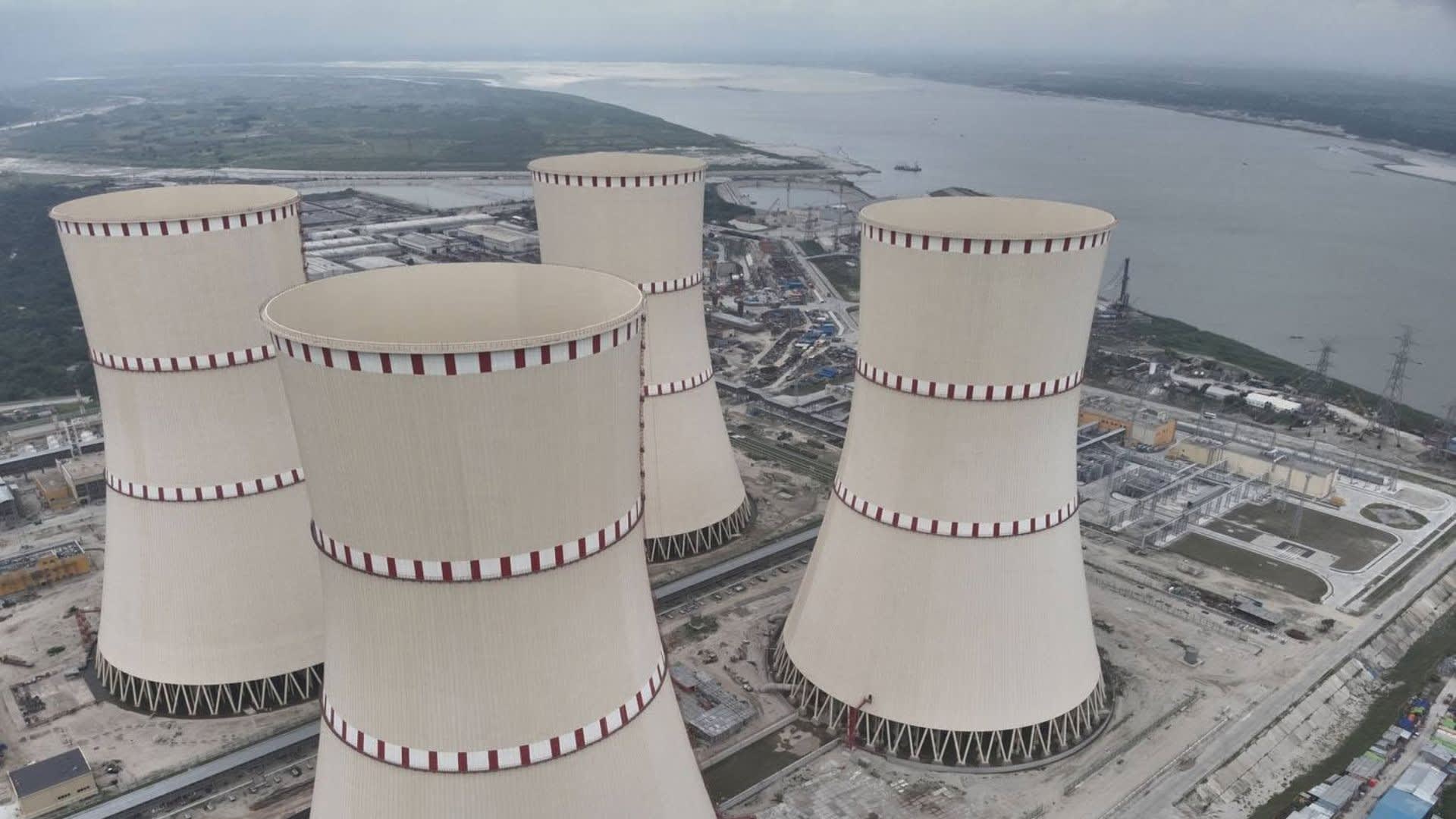
Under normal circumstances, Bangladesh might offset expensive imports by ramping up its own state-owned urea factories. Yet domestic fertilizer plants run on the exact same domestic natural gas grid that is currently starving the power and textile sectors. As BANGLADESHIST recently detailed in our analysis of how Bangladesh coal power overtook gas generation, spot liquefied natural gas (LNG) prices above $24 per MMBtu forced authorities to ration gas across the economy this year. Even as the Rooppur Nuclear Power Plant nears its winter grid debut to help ease electricity shortages, Petrobangla's daily gas supply of 2,619 million cubic feet per day (MMCFD) remains roughly 1,400 MMCFD short of national demand, leaving most domestic urea plants idle for months at a time.
In the northern agricultural districts, national import anxieties have already collided with a messy domestic distribution overhaul. As reported by The Business Standard, a government transition to a new fertilizer dealer policy left thousands of local dealership points vacant during the late-summer Aman season, causing dealers to lift only about half of their warehouse allocations.
On September 22, frustrated farmers in Kurigram blocked the Kurigram-Chilmari highway demanding urea, DAP, and triple superphosphate (TSP) after facing long queues and retail prices above official government rates. When farmers have to fight for fertilizer during the monsoon Aman season, anxiety over the much more fertilizer-dependent December Boro season multiplies.
The Diesel Pump Squeeze and the Approaching El Niño
Even if Dhaka secures enough urea and phosphate ships before December, farmers face a second mechanical hurdle: pumping water out of the ground.
Because Boro rice is grown during the dry winter months between December and April, fields must be flooded continuously using shallow and deep tubewells. According to data from the Asian Development Bank (ADB), roughly 1.22 million of Bangladesh's 1.65 million major agricultural irrigation pumps run on diesel rather than grid electricity. The country trucks that carry harvested paddy from rural mills in Bogura, Dinajpur, and Mymensingh to urban markets in Dhaka and Chattogram also run on diesel.
On September 20, the government raised retail diesel and octane prices by Tk 20 per liter to align domestic rates with volatile global oil markets. For a smallholder or tenant farmer operating a diesel irrigation pump, a Tk 20-per-liter jump directly inflates the cost of every cubic meter of water pumped onto a paddy field.
That irrigation bill could climb even higher this winter because of what is happening in the tropical Pacific Ocean. According to the World Meteorological Organization (WMO) El Niño/La Niña Update issued in September 2026, climate models show a nearly 100 percent likelihood that El Niño conditions will persist and strengthen through the end of 2026.
El Niño is the warm phase of the El Niño-Southern Oscillation (ENSO), a periodic shift in Pacific Ocean surface temperatures and atmospheric winds that alters weather patterns worldwide. In its 2026 Global Public Health Situation Analysis, the World Health Organization (WHO) and WMO noted that the late-2026 El Niño is developing alongside a likely positive Indian Ocean Dipole (IOD), an ocean temperature seesaw in which the western Indian Ocean warms while the eastern basin near Indonesia and the Bay of Bengal cools.
For South and Southeast Asia, the combination of a strong El Niño and a positive Indian Ocean Dipole typically suppresses winter and pre-monsoon rainfall while pushing daytime and nighttime temperatures well above normal. In practical farming terms, warmer, drier winter weather increases evapotranspiration (the rate at which moisture evaporates from soil and plant leaves), forcing Bangladeshi farmers to run their diesel irrigation pumps for more hours just to keep Boro paddy roots submerged.
Risk Factor for 2026–27 Boro Season | Primary Mechanism | Verified Data & Benchmark | Direct Impact on Bangladesh Agriculture |
Global Fertilizer Price Surge | Strait of Hormuz shipping disruptions & high natural gas feedstock costs | >30% price hike projected in 2026 by the World Bank; 75%–80% of BD fertilizer is imported | Raises fiscal subsidy pressure and risks under-application of urea, DAP, and TSP by cash-strapped farmers. |
Domestic Gas Deficit | Depleting onshore fields & expensive $24/MMBtu spot LNG imports | ~1,400 MMCFD daily deficit (2,619 MMCFD supply vs. 4,000 MMCFD demand) | Keeps most state-owned BCIC domestic urea fertilizer factories shut or operating below capacity. |
Diesel Fuel Price Hike | September 20 domestic fuel adjustment tied to Middle East oil volatility | 1.22 million of 1.65 million major irrigation pumps run on diesel (ADB data) | Increases winter groundwater pumping costs and rural-to-urban food trucking rates. |
Strong Late-2026 El Niño & Positive IOD | Pacific warming coupled with cooling in the eastern Indian Ocean | ~100% probability of El Niño continuing through late 2026 (WMO update) | Higher winter temperatures and drier soil conditions require heavier irrigation pumping. |
Fiscal Subsidy Contraction | Tight national budget ahead of IMF program talks | 5.78% cut in subsidies and incentives in the FY2026–27 national budget | Limits the Finance Ministry's cushion to absorb rising imported input prices without retail pass-through. |
Why the Next Eight Weeks Will Decide 2027 Food Prices
Globally, grain supplies are not yet in a 2008-style shortage; the FAO still forecasts a near-record global cereal harvest of 2.979 billion metric tonnes for the current cycle. Yet history shows that rice markets are uniquely vulnerable to sudden political panic. During the 2008 oil and fertilizer spike, export bans by major producers like India and Vietnam caused international rice prices to triple from $300 to over $1,000 per tonne within months, triggering a 38 percent domestic rice price surge in Bangladesh.
Protecting Bangladesh food security against a similar spiral in 2027 requires acting before Boro seedlings go into the ground in December. Wait until April to discover that farmers used 20 percent less fertilizer or left marginal fields fallow because of diesel bills, and the government will be forced to import expensive rice on the international spot market using scarce foreign exchange reserves.
Yet fiscal space is tight. In the FY2026–27 national budget, the government reduced overall allocations for subsidies and incentives by 5.78 percent compared with the previous fiscal year. With Dhaka simultaneously preparing for new International Monetary Fund (IMF) program negotiations, ministries face tough trade-offs over where to spend limited public funds.
Three targeted steps over the next two months can protect the winter harvest without blowing up the national budget:
Fix the local fertilizer dealership bottleneck immediately: Having urea and DAP sitting in BCIC buffer warehouses does not help a farmer in Kurigram or Naogaon if local dealer licenses are tied up in bureaucratic reviews. The Agriculture Ministry must fill vacant dealership posts and enforce digital stock tracking at the union level before November so farmers pay the official government rate rather than a black-market premium.
Deliver targeted diesel cash transfers to Boro irrigators: Rather than subsidizing diesel across the entire transport sector, the government can use its agricultural extension database and mobile financial services to send direct, seasonal irrigation rebates to smallholder farmers operating diesel pumps during the peak January-to-March dry window.
Prioritize gas allocation for high-efficiency urea production: Now that autumn cooling demand for air conditioning is easing and industrial power plants are diversifying, Petrobangla should guarantee a steady winter gas allocation to its most modern, fuel-efficient domestic fertilizer plant, the Ghorashal-Polash Urea Fertilizer Factory, reducing the country's exposure to Strait of Hormuz freight rates.
Bangladesh has avoided a physical grain shortage so far in 2026 because its farmers kept producing near-record harvests despite floods and economic turmoil. Keeping Bangladesh food security intact through 2027 will depend on whether Dhaka treats the December Boro planting window with the same urgency it gives to power plants and ports.

Comments
0