


Bangladesh has spent years fighting dengue with mosquito spraying, public-awareness campaigns and emergency hospital care. Yet the disease continues to return, putting pressure on families, hospitals and public-health authorities.
The latest figures show why the problem cannot be treated as a seasonal inconvenience. On October 11, 2026, Bangladesh’s Directorate General of Health Services (DGHS) reported 99,275 dengue-related hospital admissions and 303 deaths since the beginning of the year. The daily dashboard also recorded 2,193 new admissions and four deaths in the preceding 24-hour reporting period. DGHS dengue dashboard.
The figures represent more than a public-health emergency. They raise difficult questions about urban planning, drainage, waste management, climate resilience and the way Bangladesh responds to recurring disease outbreaks.
Dengue is transmitted by infected Aedes mosquitoes. But the conditions that allow those mosquitoes to multiply are shaped by human decisions: how buildings are maintained, how rubbish is collected, whether drains function properly and how quickly authorities respond when breeding sites are identified.
That is why the country’s dengue problem cannot be solved through fogging alone. It requires a more consistent approach to prevention, surveillance and public accountability.
A growing outbreak with a familiar pattern
On October 6, Reuters reported that Bangladesh was considering clinical trials of a dengue vaccine as infections and deaths continued to rise. At that point, health ministry figures cited by the news agency showed more than 90,350 hospital admissions and 281 deaths since January.
By October 11, the DGHS dashboard showed that the cumulative totals had climbed further. The two reports provide a clear indication of the outbreak’s continuing burden, although daily figures can change as cases are reported and records are updated.
Reuters: Bangladesh considers dengue vaccine trials as outbreak worsens.
Bangladesh is no stranger to severe dengue seasons. The country experienced its deadliest recorded outbreak in 2023, when more than 1,700 people died, according to Reuters. The recurrence of large outbreaks suggests that emergency responses have not been sufficient to eliminate the conditions that sustain transmission.
The consequences extend beyond the number of people admitted to hospital. Patients may lose days or weeks of work, students may miss classes, and families can face transport costs, diagnostic expenses and the challenge of caring for sick relatives.
For households with limited savings, an unexpected hospital admission can become a financial crisis as well as a medical one.
The pressure also falls unevenly. People living in crowded neighbourhoods, poorly drained areas or buildings with unreliable waste-management services may have fewer options for avoiding mosquito exposure. Families cannot independently fix public drains, manage construction-site water or ensure that neighbouring properties are maintained.
Individual precautions matter, but they cannot replace effective public services.
Why mosquito spraying is not enough
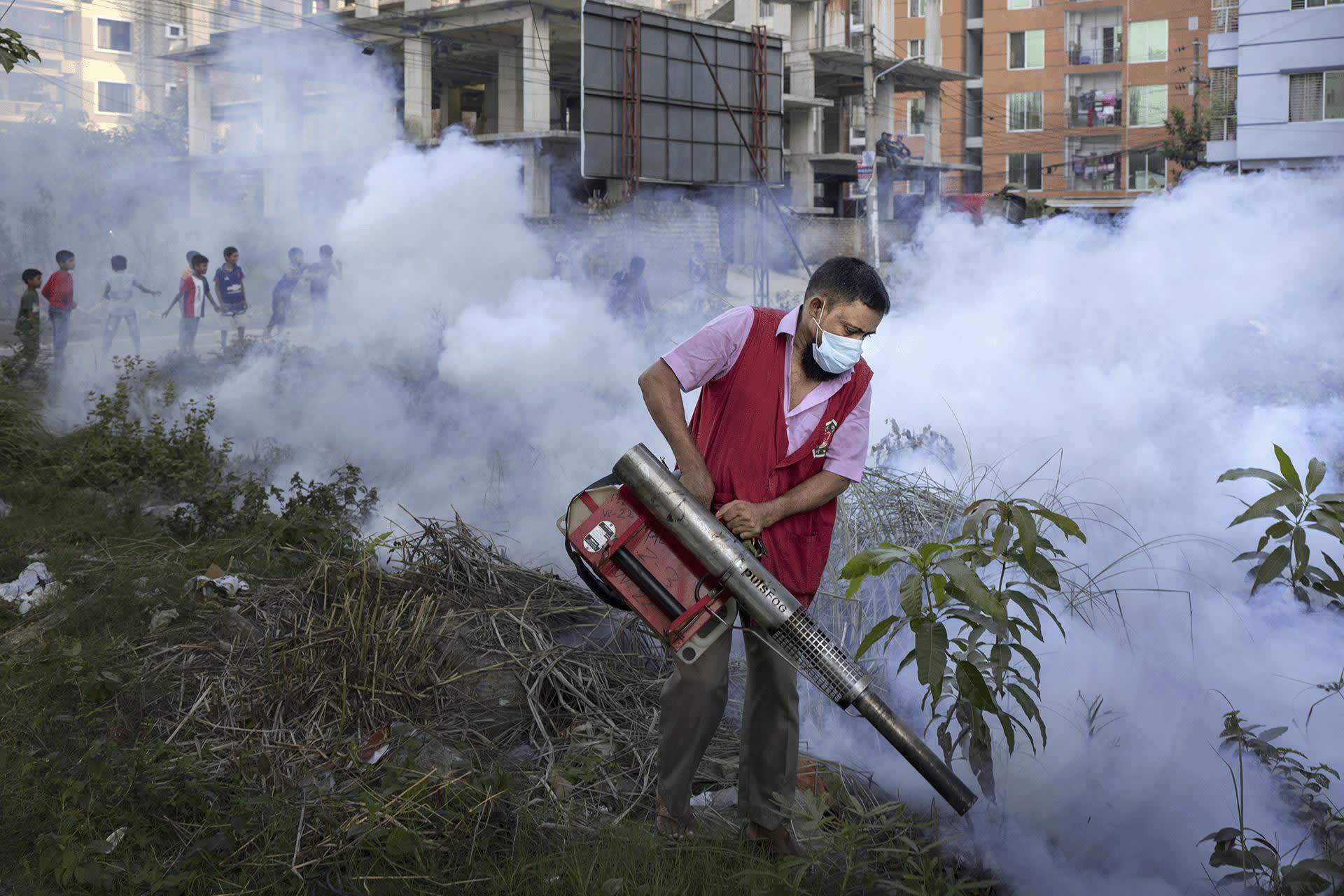
Mosquito spraying is one of the most visible responses to dengue. Residents see fogging machines moving through streets, and the activity can create the impression that an area is being protected.
But visible activity is not the same as effective, sustained mosquito control.
Adult mosquitoes can be killed by appropriately applied insecticides, depending on the product, application method and mosquito susceptibility. However, spraying does not automatically eliminate eggs and larvae developing in containers or standing water. New adult mosquitoes can emerge if breeding sites remain.
The central challenge is therefore to identify and remove the places where mosquitoes reproduce.
These can include uncovered water-storage containers, discarded plastic packaging, old tyres, flowerpots, rooftop containers, construction materials and blocked drainage points. Even small amounts of standing water can become breeding sites under suitable conditions.
Bangladesh's dense urban environment makes this especially difficult. A single building may have several potential breeding locations, while the surrounding neighbourhood may contain hundreds more. Treating one property does not guarantee that the wider area is safe.
The problem becomes harder when responsibility is divided among residents, landlords, developers, municipal authorities and other public agencies.
A household can empty its own containers and clean its roof. It cannot clear a blocked public drain several streets away or enforce maintenance requirements at a neighbouring construction site.
Effective control needs coordinated inspections, reliable waste collection, drainage maintenance and follow-up visits to ensure that identified problems have actually been resolved.
Fogging can be one part of that strategy. It should not be mistaken for the entire strategy.
Rainfall, changing weather and the risk of longer transmission seasons
Weather influences dengue transmission because mosquitoes depend on environmental conditions to reproduce and survive.
Rain can fill containers and create temporary pools of water. Warm conditions can influence mosquito development and viral transmission. But rainfall does not produce the same effect everywhere: drainage quality, water-storage practices, temperature and local infrastructure all influence the outcome.
Bangladesh's weather patterns make preparation particularly important. The monsoon brings heavy rainfall to many areas, while the transition out of the rainy season does not immediately remove every breeding site.
On October 1, Reuters reported that health authorities were warning of the possibility of a worsening outbreak following a deadly September. The report linked recent rainfall and changing weather conditions with concerns about continued transmission into October.
Reuters: Bangladesh warns dengue outbreak could worsen after deadly September.
Climate change adds another challenge, but it should not become a catch-all explanation for every outbreak. Weather conditions influence the risk; the quality of local prevention and public-health responses determines how effectively that risk is managed.
Better forecasting can help authorities identify periods and locations that need additional attention. Rainfall records, temperature data, mosquito surveillance, case reports and hospital admissions can be combined to guide inspections and allocate resources.
Such systems are useful only when information leads to action. Identifying a high-risk neighbourhood matters little if officials cannot organise inspections, remove breeding sites or communicate practical advice to residents.
The health system faces pressure from more than one direction
Dengue is also unfolding alongside other health challenges.
In its October 6 report, Reuters noted that Bangladesh's healthcare system was under additional pressure from a serious measles outbreak. The overlapping emergencies demonstrate why hospitals need preparation that goes beyond responding to a single disease.
When admissions rise rapidly, hospitals must manage beds, staffing, laboratory capacity, fluids and other necessary supplies while ensuring that patients receive appropriate assessment and monitoring.
For dengue, early medical evaluation is important because the illness can sometimes progress from a relatively mild fever to a severe condition. Warning signs may emerge as the fever subsides, meaning that an apparent improvement does not always indicate recovery.
People with suspected dengue should seek medical advice and follow professional guidance, particularly if symptoms worsen. Severe abdominal pain, persistent vomiting, bleeding, difficulty breathing, marked drowsiness or other signs of deterioration warrant urgent medical assessment.
Patients should avoid self-medicating with aspirin or ibuprofen when dengue is suspected because these medicines can increase bleeding risk. A qualified clinician can advise on appropriate fever management, hydration and monitoring.
Public communication should explain these risks clearly without encouraging panic or implying that every fever is dengue.
Hospitals also need reliable information about where cases are increasing. Local trends can help health officials anticipate demand, direct resources and identify areas where preventive action may have the greatest benefit.
Could a dengue vaccine change the picture?
The possibility of dengue vaccine trials in Bangladesh is an important development, but it should be understood as a potential long-term addition to disease control rather than an immediate solution.
Reuters reported on October 6 that State Minister for Health M.A. Muhit said the government was considering clinical trials. The report also noted that all four dengue virus serotypes were circulating in Bangladesh, raising concerns about repeated infections.
Dengue is caused by four closely related virus serotypes. Infection with one serotype does not provide complete protection against the others, and the relationship between previous infection and the risk of severe disease is complex.
Vaccines therefore require careful evaluation. Their suitability can depend on the specific product, a person's age, previous infection status, national recommendations and regulatory approval. A vaccine that is appropriate for one population or situation may not be appropriate for another.
Clinical trials are designed to answer questions about safety and effectiveness in a defined population. They require ethical review, informed consent, regulatory oversight and appropriate monitoring.
The announcement that trials are being considered does not mean that a vaccine has been approved for widespread use in Bangladesh or that it is immediately available to the public.
If a suitable vaccine becomes available following the necessary scientific and regulatory assessments, it could complement other preventive measures. It would not remove the need for mosquito control, surveillance, public education and accessible medical care.
The immediate priority remains reducing exposure and ensuring that people who become ill can receive timely treatment.
What Bangladesh's cities need to change
A more effective dengue response begins with treating prevention as an ongoing municipal responsibility rather than a campaign that intensifies only after deaths increase.
First, local authorities need systematic inspections of likely breeding sites. These should cover public spaces, construction sites, rooftops, drains and other locations where water accumulates. Inspections should be followed by practical corrective action, not simply warnings.
Second, waste collection and drainage maintenance need to become part of disease prevention. Discarded containers and blocked drains are not merely aesthetic problems when they create conditions for mosquitoes to breed.
Third, authorities should publish clear, regularly updated information about cases, deaths and local risk. The DGHS dashboard provides a starting point for public access to national dengue statistics. More accessible local reporting could help residents understand conditions in their own areas and help researchers evaluate whether interventions are working.
Fourth, mosquito-control programmes should be assessed through measurable outcomes. The number of fogging operations or awareness events is not enough to establish success. Authorities should also track breeding-site removal, inspection coverage, follow-up action and changes in local disease trends.
Finally, responsibility needs to be shared without being shifted entirely onto households. Residents should remove standing water from their properties, keep containers covered and report breeding sites. Municipal authorities must provide the infrastructure, inspections and enforcement that individuals cannot supply on their own.
These changes are not as visually dramatic as a large spraying campaign. Their value lies in reducing the conditions that allow outbreaks to continue.
What residents can do now
While public agencies work on longer-term improvements, households can take practical steps to reduce mosquito breeding and exposure.
Empty, clean or cover containers that collect water, including those on rooftops and balconies.
Check flowerpots, discarded tyres, buckets, drains and other places where water can remain.
Use suitable mosquito repellents according to their product instructions, and use window screens or mosquito nets where appropriate.
Wear clothing that reduces exposed skin, particularly when mosquito activity is high.
Seek medical advice for suspected dengue and urgent care if warning signs develop.
Report persistent breeding sites to the relevant local authority rather than assuming someone else will address them.
These precautions can reduce risk, but they cannot guarantee that a person will avoid infection. Neighbourhood-wide prevention remains essential.
The real test is whether prevention continues after the headlines fade
Bangladesh's dengue crisis is not simply a contest between people and mosquitoes. It is a test of whether public-health planning, city management, scientific evidence and everyday civic responsibilities can work together.
The latest DGHS figures show that the burden remains substantial. The discussion of vaccine trials offers a possible path towards additional protection, but the benefits of any future vaccine will depend on scientific evidence, regulatory decisions and implementation.
Meanwhile, the fundamentals cannot wait: remove breeding sites, maintain drains, improve waste management, strengthen surveillance and ensure that patients receive appropriate care.
A successful response should not be measured only by how quickly authorities react when hospitals fill up. It should also be measured by whether fewer people become ill in the first place.
Bangladesh has faced dengue repeatedly. The next step is to move beyond repeating emergency measures and build a system that prevents more outbreaks from becoming national crises.




Comments
0