


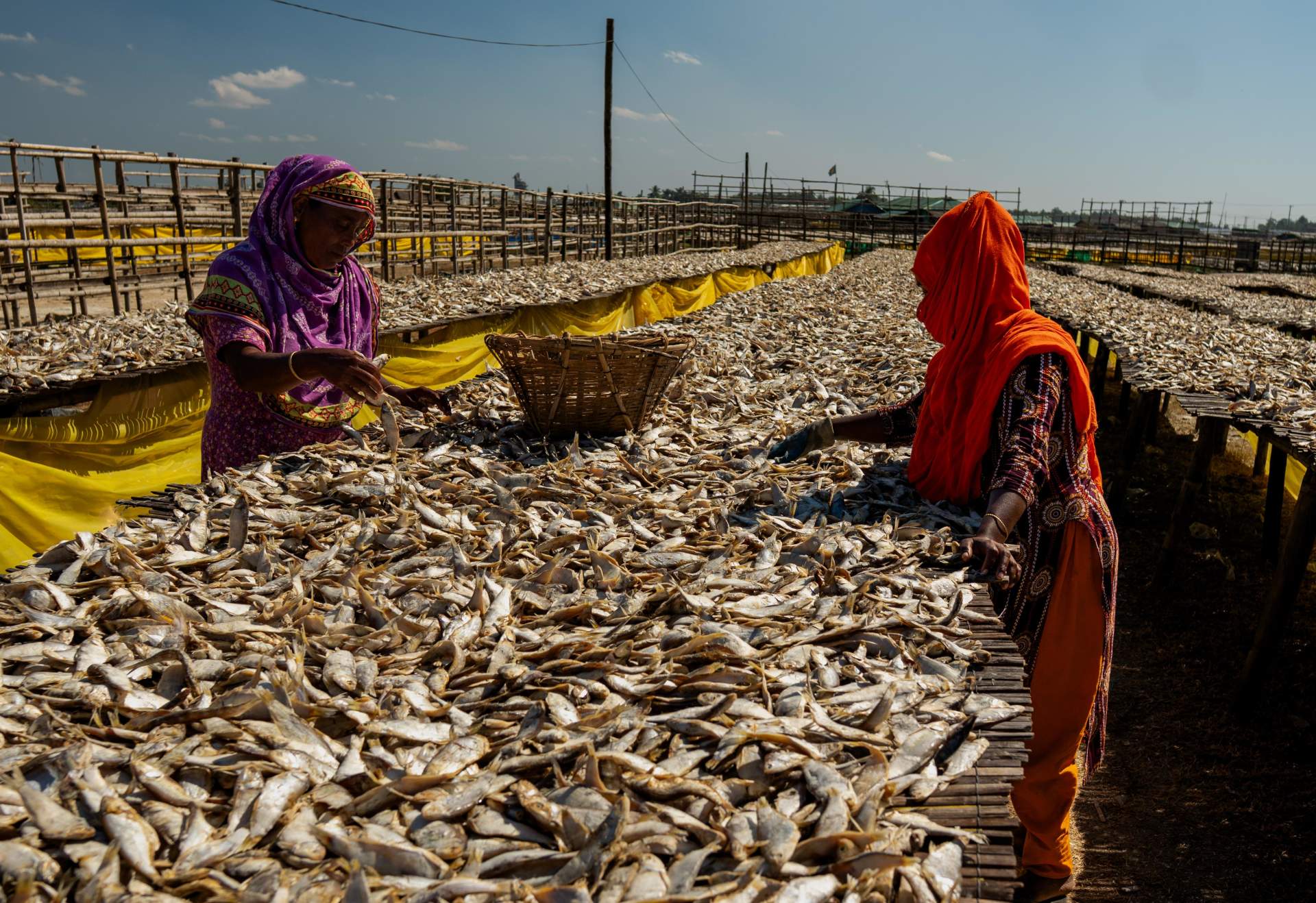
Microplastics were detected in every commercially dried marine seafood sample examined from four coastal regions of Bangladesh, according to a scientific study that raises fresh questions about plastic pollution and the safety of the country's dried seafood supply.
Published in Marine Pollution Bulletin on October 15, the study examined dried seafood collected from the Sundarbans, Kuakata, Teknaf and Cox's Bazar. Researchers reported microplastic concentrations ranging from 0.25 to 1.30 particles per gram of dry weight.
The findings provide new evidence of plastic contamination in commercially dried marine seafood in Bangladesh. However, they do not establish how much microplastic people consume through their diets or what health effects, if any, may result.
What the researchers found
The research team, affiliated with the Department of Fisheries at the University of Chittagong, examined six marine seafood species, including several fish species and two types of shrimp.
Microplastics appeared in all the samples investigated. The researchers found that fibres were the most common particle shape, while blue and black particles were frequently observed. Smaller particles also made up a substantial share of the material recovered.
Using Fourier-transform infrared spectroscopy, a laboratory technique that helps identify the chemical composition of materials, the researchers identified seven types of plastic polymers. Polyethylene accounted for 30.49% of identified polymers, while polypropylene accounted for 24.39%.
Both materials are widely used in plastic products and packaging. Their presence illustrates the range of plastic materials that can enter marine environments and potentially reach seafood.
The study also found differences in the estimated polymer-associated hazard index between regions. The index was highest in Kuakata and lowest in the Sundarbans. This measure reflects the hazard scores assigned to the polymers detected; it is not a direct measurement of illness or the probability that a consumer will experience harm.
Average microplastic abundance also varied across locations, but the differences were not statistically significant. The results therefore do not establish that seafood from one region consistently contains more microplastics than seafood from another.
How plastic may enter dried seafood
Microplastics are plastic particles smaller than five millimetres. They can form when larger plastic waste breaks down, while other particles enter the environment through sources such as synthetic textiles, wastewater and industrial activity.
Marine organisms may encounter these particles in the water or through their food. Seafood can then carry some of that contamination into the human food chain.
Dried seafood presents an additional question: contamination may occur during processing and handling as well as before the catch reaches shore. Drying surfaces, equipment, storage containers, packaging and surrounding environmental conditions are all potential areas for investigation, but the study does not establish which pathways were responsible for the particles it detected.
That distinction matters for any attempt to reduce contamination. If pollution originates mainly in the marine environment, the response may require better waste management and controls on plastic entering waterways. If processing contributes substantially, improvements to drying and handling practices may also help.
The researchers highlighted the need for studies that compare seafood before and after drying and examine individual processing stages.
What the findings mean for consumers
Dried fish and other dried marine seafood are familiar foods in Bangladesh, particularly in coastal communities. The discovery of microplastics in the samples therefore deserves attention from researchers, food-safety authorities and the seafood industry.
But the findings should not be interpreted as proof that all dried seafood sold in Bangladesh is contaminated. The study covered selected species and samples from four coastal areas, not every product, market or processing facility in the country.
Nor does the detection of microplastics by itself demonstrate that eating the tested seafood causes a particular disease. Assessing potential health risks requires more evidence about the types and sizes of particles, the amount people consume, how those particles behave in the body and the possible effects of long-term exposure.
The study establishes a baseline for further research rather than a complete assessment of consumer risk.
What needs to happen next
Further research could compare freshly caught seafood with products sampled at successive stages of drying, processing, storage and sale. Such work could help identify where contamination enters the supply chain and which interventions are most effective.
Researchers and food-safety authorities could also investigate how frequently the findings occur across a wider range of species, seasons, markets and production methods. Standardised testing would help make results from different locations easier to compare.
For the seafood industry, cleaner processing environments, careful handling and better control of potential contamination sources are reasonable areas for investigation. Their effectiveness should be measured rather than assumed.
Bangladesh's coastal economy and food supply are closely connected to marine resources. Understanding how plastic pollution reaches seafood is therefore both an environmental research priority and a practical question for food production.
The latest study provides evidence that microplastics were present in every sample examined. The next task is to determine where the contamination originates, how widespread it is beyond the tested samples and what it means for people who regularly consume dried seafood.

Comments
0