

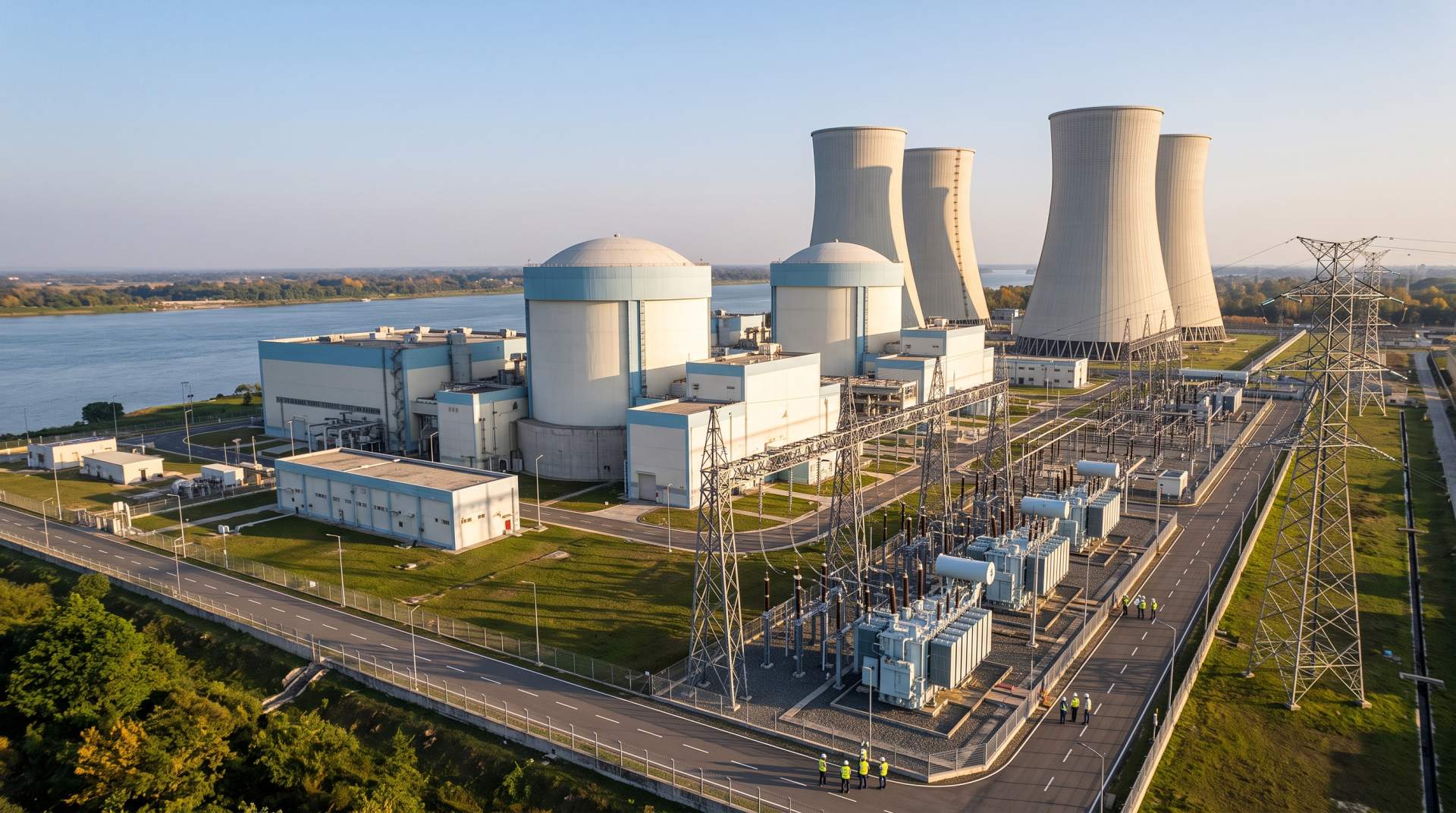
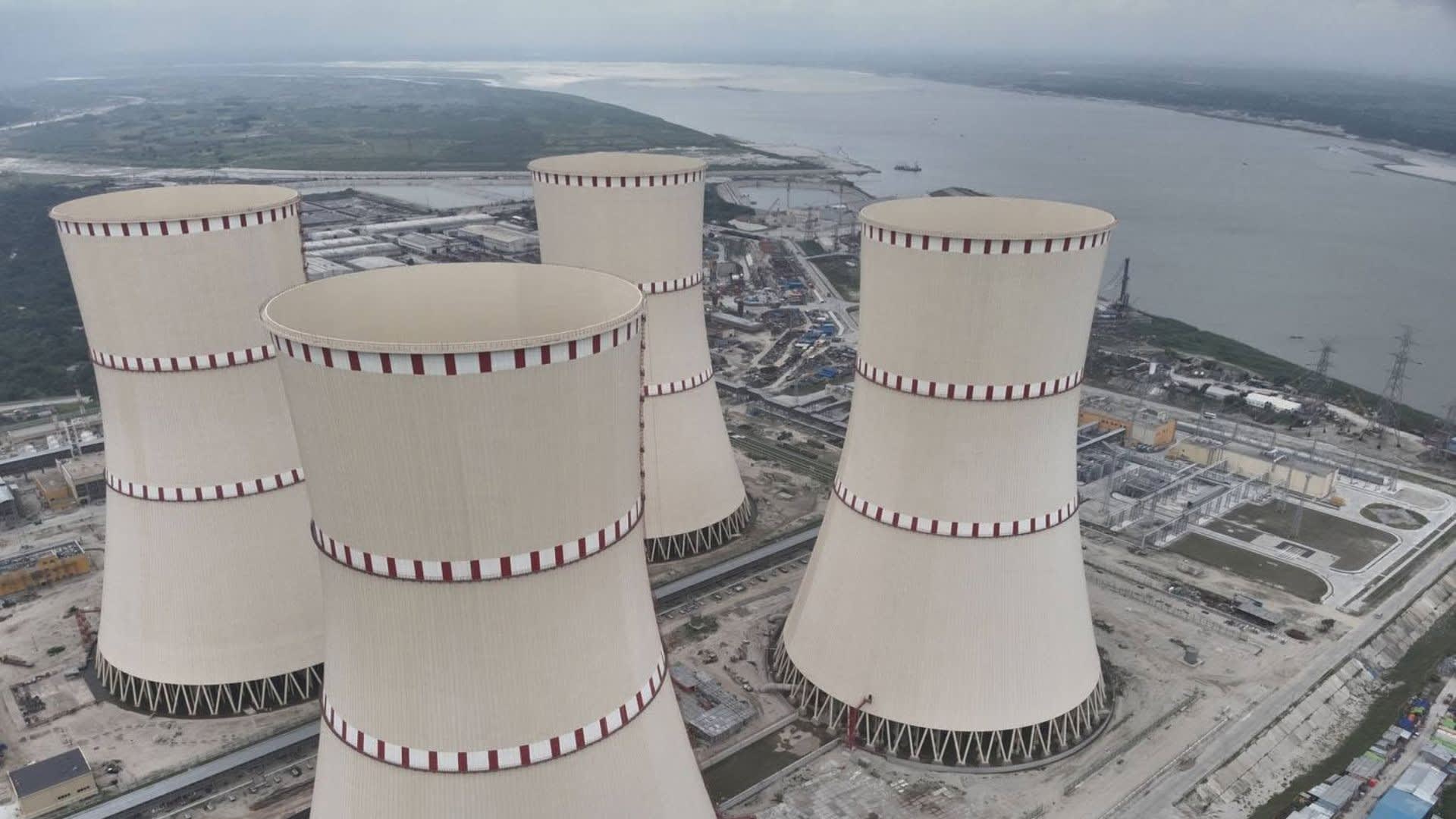
At 12:20 p.m. on Saturday, October 3, a heavily guarded convoy of military, police, and intelligence vehicles rolled through the gates of the Rooppur Nuclear Power Plant in Ishwardi, Pabna, delivering a fresh consignment of Russian uranium fuel that puts Bangladesh’s first atomic energy facility within reach of generating electricity this winter.
The special cargo flight carrying the nuclear fuel assemblies had touched down at Hazrat Shahjalal International Airport in Dhaka late Friday night at 11:45 p.m. before making the highway journey northwest to the banks of the Padma River. Speaking after the shipment was formally received by Project Director Kabir Hossain and Nuclear Power Plant Company Bangladesh Limited (NPCBL) Managing Director Zayedul Hasan, Science and Technology Minister Fakir Mahbub Anam confirmed that the remaining uranium shipments are expected within the next seven to 10 days, putting the plant on track to feed its first power into the national grid between December 2026 and January 2027.
For a country that spent the summer of 2026 grappling with $24-per-MMBtu spot natural gas prices, furnace oil hikes, and persistent gas shortages across industrial zones, the final countdown at Rooppur is more than a symbolic engineering feat. Once both of its 1,200-megawatt (MW) reactors reach full operation, the $12.65 billion facility is designed to supply roughly 10 percent of Bangladesh’s electricity capacity with near-zero carbon emissions. Getting those electrons onto the grid, however, requires navigating high-pressure reactor physics, tangled South Asian airspace politics, and tightening Western financial sanctions on Moscow.
Inside the VVER-1200 Commissioning Sequence
Delivering uranium canisters to the plant site is only one part of bringing a nuclear reactor to life. Before a nuclear station can split atoms to boil water and spin steam turbines, engineers must prove that its cooling loops and safety valves can withstand extreme heat and pressure without a single leak.
Rooppur utilizes two Russian-designed VVER-1200 reactors, a Generation III+ pressurized water reactor (PWR) model built by Russia’s state nuclear corporation, Rosatom. In a pressurized water reactor, water inside the primary circuit is kept under immense pressure so that it can absorb heat from the uranium fuel core up to roughly 300°C without boiling into steam inside the reactor vessel itself. Instead, that superheated water passes through steam generators to boil a separate, isolated secondary loop of water that drives the turbine generators.
Because pressure control is the primary defense against a core overheating event, the valves that regulate and vent pressure are among the most critical components in the entire building. After fuel loading preparations began at Unit 1 in late April 2026, commissioning engineers encountered an issue with a safety valve that required careful mechanical adjustment before testing could proceed.
On the night of September 29 and into the morning of Wednesday, September 30, NPCBL and Russian specialists successfully completed a 16-megapascal (MPa) high-pressure test of Unit 1’s Pressure Operated Relief Valve (PORV) and associated Main Safety Valves (MSVs). One megapascal equals roughly 10 times normal atmospheric pressure at sea level, meaning the valve assembly was tested at nearly 160 atmospheres of pressure from both the Main Control Room and the Emergency Control Room.
With the 16 MPa phase verified, engineers are preparing for the next testing tier at approximately 18 MPa. NPCBL officials emphasized this week that the commissioning team will verify every stage step by step without compromising safety to meet a calendar target. When Unit 1 begins initial generation between December and January, it will not jump straight to its full 1,200 MW nameplate capacity; instead, officials expect the reactor to start by supplying an initial 300 MW during grid synchronization and gradually ramp up output as thermal and turbine tests conclude.
The Geopolitics of Flying Uranium Across Asia
While engineers inside the containment dome focus on valve pressures, moving nuclear fuel from Russian enrichment facilities to Dhaka has become a delicate diplomatic exercise.
Unlike coal or liquefied natural gas, which travel by sea in slow bulk carriers, fabricated nuclear fuel assemblies are typically flown by specialized cargo aircraft under strict international non-proliferation and aviation safety protocols. According to Rosatom’s official schedule announced on September 28, airborne fuel deliveries for Rooppur’s second reactor, Unit 2, are scheduled to run in several consignments from October through the end of December 2026.
Yet flying Russian nuclear cargo across Eurasia in late 2026 requires thread-the-needle flight planning. A consignment originally scheduled to land in Dhaka on September 24 was abruptly delayed after the cargo aircraft failed to secure timely clearance to cross Pakistani airspace. When the shipment finally arrived in Dhaka on the night of October 2, aviation sources noted that the specialized flight had routed through scheduled stops across Kazakhstan, Afghanistan, Pakistan, and India before touching down at Hazrat Shahjalal International Airport.
Project Parameter | Unit 1 Status (October 2026) | Unit 2 Status (October 2026) | Financial & Grid Context |
Reactor Model & Capacity | VVER-1200 (1,200 MW gross; 300 MW initial ramp-up) | VVER-1200 (1,200 MW gross) | 2,400 MW total plant capacity (~8% to 10% of national grid) |
Nuclear Fuel Delivery | Initial fuel loaded April 2026; fresh batch arrived Oct 3, 2026 | Air consignments scheduled Oct to Dec 2026 | Transported by air from Russia with multi-country clearances |
Commissioning Milestone | Cleared 16 MPa relief valve test on Sept 30; 18 MPa test next | Construction and equipment installation advancing | Managed by NPCBL and Rosatom engineering teams |
Target Grid Connection | Initial generation expected Dec 2026 to Jan 2027 | Full completion targeted by Dec 2027 | Requires full synchronization with high-voltage river-crossing lines |
Project Cost & Financing | $12.65 billion total ($11.38B Russian state loan; 90% share) | Covered under the same intergovernmental credit deal | $164M delay penalty waived; repayment extended by 2 years |
The logistical friction extends far beyond airspace permits. Rooppur is 90 percent financed by an $11.38 billion state credit line from Russia, with the Bangladeshi government covering the remaining 10 percent of the $12.65 billion total cost. After the Russia-Ukraine war triggered Western banking sanctions in 2022, Bangladesh found itself unable to transfer loan repayments in US dollars through designated Russian banks, even though Dhaka had deposited the funds into an escrow account at Sonali Bank.
To break the impasse, Moscow and Dhaka negotiated amended credit protocols that waived $164.17 million in accumulated delay penalties, extended the loan disbursement window to December 2026 for the remaining $3.68 billion in project funds, postponed the start of principal repayments by 1.5 years, and allowed Bangladesh to settle obligations in Russian rubles, Chinese yuan, or other agreed currencies.
Even with that bilateral workaround in place, global sanctions compliance remains a moving target. On September 18, 2026, US President Donald Trump signed a sweeping new Russia-Iran sanctions bill into law, with most provisions taking effect within 30 days. While Bangladesh does not import Russian crude oil, the law’s secondary sanctions mechanisms and "Operation Economic Outcast" rules penalize third-party financial institutions, insurers, and logistics providers that facilitate transactions with sanctioned Russian and Iranian state entities. For Dhaka, keeping Rooppur’s spare-parts supply chain, insurance coverage, and multi-currency loan repayments insulated from secondary banking blocks will require constant diplomatic and financial vigilance throughout the plant’s 60-year operating lifespan.
Why Nuclear Baseload Matters for a Fuel-Starved Grid
To appreciate why energy planners in Dhaka are eager to get Rooppur’s first 300 MW—and eventually 2,400 MW—onto the national grid, look at the fuel crisis squeezing the rest of Bangladesh’s electricity sector this autumn.
On September 27, daily operational figures from state oil and gas corporation Petrobangla showed total national gas supply standing at 2,619 million cubic feet per day (MMCFD) against a nationwide demand of 3,800 to 4,000 MMCFD, leaving a daily deficit of up to 1,400 MMCFD even with imported liquefied natural gas (LNG) terminals running at peak capacity. Meanwhile, on October 1, the Bangladesh Energy Regulatory Commission (BERC) raised the price of furnace oil used in liquid-fuel power plants by Tk 11.92 per liter to Tk 108.78, while household liquefied petroleum gas (LPG) cylinder prices jumped Tk 400 to Tk 500 above official rates amid import bottlenecks.
As BANGLADESHIST recently reported in our analysis of how Bangladesh coal power overtook gas generation, sky-high spot LNG prices above $24 per MMBtu forced grid operators to lean heavily on imported coal during the summer months of 2026. That fuel switch kept the lights on, but it exposed the country to volatile seaborne commodity markets and raised the carbon intensity of the national grid.
Nuclear power operates on completely different fuel economics. In a coal or gas power plant, the raw fuel burned every day accounts for the vast majority of the cost of each kilowatt-hour of electricity. In a nuclear power plant, the upfront capital cost of building the concrete containment structure and reactor is enormous, but the actual uranium fuel represents only a small fraction of ongoing operating expenses. Furthermore, a single nuclear refueling load keeps a reactor running continuously for 12 to 18 months, shielding the power grid from sudden maritime chokepoint crises in the Strait of Hormuz or spot-market price spikes.
Government estimates previously projected that electricity from the Rooppur Nuclear Power Plant would cost between Tk 4 and Tk 8 per kilowatt-hour (unit), with earlier official benchmarks citing Tk 4 to Tk 4.50 per unit, compared with roughly Tk 13.77 per unit from furnace oil and more than Tk 28 per unit from high-speed diesel. A technical committee under the Bangladesh Atomic Energy Commission has been reviewing the final power purchase tariff to account for currency depreciation and extended construction timelines, and the final per-unit rate will determine how much fiscal relief the Bangladesh Power Development Board (BPDB) actually sees once commercial operations begin.
There is also a direct trade benefit for Bangladesh’s export manufacturers. As we detailed in our report on how the EU greenwashing ban tests Bangladesh’s green garment factories, European fashion brands now require verifiable lifecycle emissions data for the clothing they buy. Because nuclear energy produces virtually zero greenhouse gas emissions during generation, adding 2,400 MW of zero-carbon nuclear power to the national grid lowers the average Scope 2 carbon footprint of every garment factory drawing electricity from BPDB distribution lines.
The Final Hurdles Before December Switch-On
Between October and the targeted winter switch-on, three practical tests remain for the Rooppur Nuclear Power Plant and the ministries overseeing it.
First, commissioning engineers must complete the 18 MPa hot functional testing phase on Unit 1 and integrate the remaining uranium fuel assemblies arriving this month without rushing safety protocols. In the nuclear industry, first-of-a-kind reactors in newcomer countries routinely take several months of incremental testing between initial criticality (the first sustained nuclear reaction) and stable commercial power delivery.
Second, grid infrastructure must match the reactor’s output. A 1,200 MW nuclear unit cannot simply be plugged into a weak local substation; it requires dedicated 400-kilovolt (kV) and 230-kV high-voltage transmission lines and specialized river-crossing towers across the Padma and Jamuna rivers to evacuate power safely and maintain grid frequency stability. Historically, delays in completing these Indian-financed and multinational transmission corridors threatened to bottleneck Rooppur’s launch, making full readiness of the grid evacuation lines essential as Unit 1 scales from 300 MW toward full load in 2027.
Third, Bangladesh must continue building its domestic nuclear regulatory and operational workforce. According to the World Nuclear Association’s country profile on Bangladesh, hundreds of Bangladeshi engineers and technicians have trained in Russia and under International Atomic Energy Agency (IAEA) safety frameworks, including Pre-Operational Safety Review Team (Pre-OSART) assessments. Sustaining strict, independent safety oversight through the Bangladesh Atomic Energy Regulatory Authority (BAERA) will be critical once the plant transitions from Russian construction contractors to daily Bangladeshi operation.
Sixty-four years after the land at Rooppur was first earmarked for an atomic reactor in 1962, the sight of armed fuel convoys arriving in Ishwardi shows that Bangladesh has finally crossed the threshold into the nuclear club. If Unit 1 clears its final pressure tests this autumn and synchronizes smoothly with the national grid this winter, Rooppur will offer Dhaka something it has never had before: a massive, weather-independent source of electricity that does not depend on the daily price of a fossil-fuel tanker.

Comments
0