


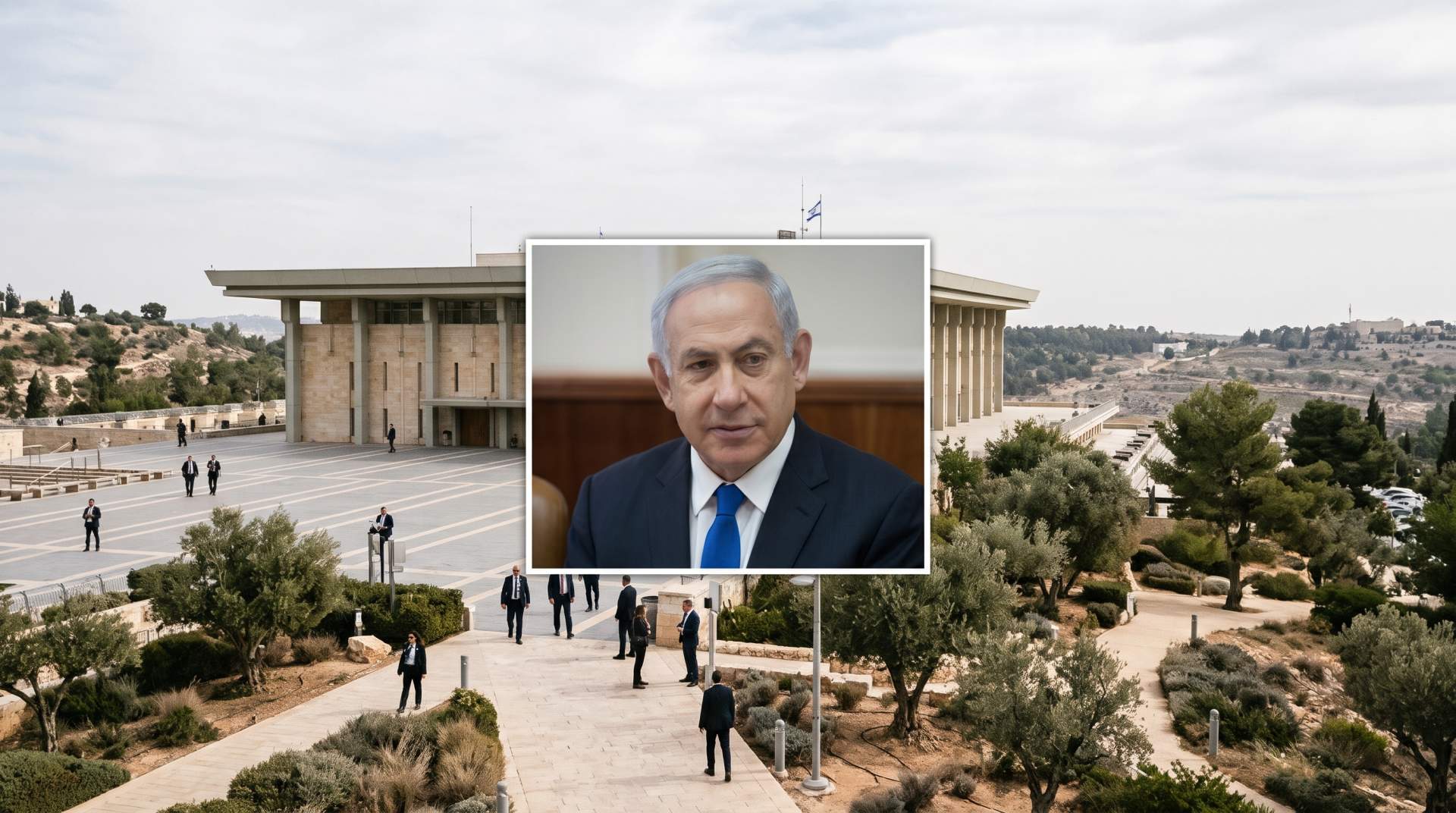
Israel’s election has left Prime Minister Benjamin Netanyahu facing a difficult path to securing another government, with partial results putting his bloc ahead of the opposition but still short of the parliamentary majority required to govern. The result has opened the prospect of prolonged coalition negotiations, with Arab-led parties potentially playing a decisive role in determining who leads the country.
As of the morning of October 28, partial results reported by The Times of Israel, citing figures from the Central Elections Committee, showed Netanyahu’s bloc with 56 seats and the opposition bloc led by Gadi Eisenkot with 48. Arab parties held 16 seats in the reported breakdown. A majority in Israel’s 120-member Knesset requires 61 seats.
The count remains incomplete, and the balance could change as additional ballots are processed. Neither the early projections nor the partial tally should be treated as a final determination of who will form the next government.
Why the election has produced uncertainty
The election has exposed a central challenge in Israeli politics: winning the largest share of seats does not necessarily mean having enough support to govern.
Netanyahu’s Likud party entered the election seeking to retain power through an alliance with right-wing and religious parties. His opponents, led by former military chief Gadi Eisenkot, sought to assemble a coalition capable of replacing him.
Exit polls released after voting ended on October 27 initially suggested a close contest, with major television networks projecting different seat distributions. Some showed the rival blocs tied, while others gave one side a narrow lead. Subsequent vote counting has provided a clearer picture but has not settled the question of who can command a parliamentary majority.
Netanyahu called for a strong right-wing government, while Eisenkot argued that voters had expressed a desire for political change. Neither position resolves the arithmetic required to form a coalition.
Israel’s president, Isaac Herzog, will play a formal role in the next stage by consulting political parties and selecting the candidate considered best placed to form a government. That decision depends on the prospects of securing sufficient parliamentary backing, rather than simply which party finishes first.
Arab-led parties could become pivotal
The representation won by Arab-led parties is one of the most consequential features of the developing result.
If the two principal blocs remain short of 61 seats, support from parties outside their existing alliances could determine whether either side can form a government. An opposition-led coalition might need backing from Arab-led parties, but such an arrangement would face political resistance and difficult negotiations.
Netanyahu has rejected dependence on Arab parties for a governing majority. The opposition also faces questions about whether its different factions can agree on a common programme and the terms of any partnership.
These competing constraints mean that the next phase could involve negotiations across several parties, with political leaders weighing policy differences against the need to assemble a workable majority.
If no candidate can form a government, Israel could face another election. However, that outcome is not inevitable: coalition negotiations can produce arrangements that are not obvious from the initial seat count.
Security and domestic divisions remain central
The election took place amid continuing arguments over national security, military policy and the direction of the country following years of conflict.
Voters have also been divided over Netanyahu’s alliance with far-right parties, exemptions from military service for ultra-Orthodox Jewish communities and questions about his leadership. The opposition’s promise of political change has attracted support, but replacing an incumbent government requires more than a strong showing against it.
The outcome also matters beyond domestic politics. Israel’s government shapes decisions on regional security, relations with the United States and other international partners, and policy toward Palestinians and neighbouring countries. A prolonged period of uncertainty could complicate political decision-making, although the practical effects will depend on how long coalition talks last and what arrangements emerge.
For now, it would be premature to conclude that Netanyahu has been defeated or that Eisenkot is on course to become prime minister. Partial results indicate that Netanyahu’s bloc is ahead, but the reported numbers leave it short of a majority.
What happens next
The immediate priority is to complete the vote count and establish the final distribution of seats. Special ballots, including votes cast by military personnel and other eligible voters outside ordinary polling arrangements, may affect the final tally.
Once the results are established, political consultations will determine which candidate has the strongest chance of forming a government. Negotiations will then test whether the rival blocs can reach agreements with enough parliamentary support to govern.
The election has therefore produced a political contest that extends beyond the ballot count. The decisive question is not only which party wins the most seats, but which combination of parties can assemble a stable majority.
Until that becomes clear, Israel faces a period of uncertainty over its next government and the policies it will pursue.

Comments
0